Scarab of the Unseen

An opponent staples a parasitic Aura onto your creature (a Pacifism-style lock, or worse, an enchantment that hands them control of the permanent), and most of the color pie offers no clean way to peel it off without killing the host. This is the colorless answer to that puzzle. Sacrifice it and every Aura attached to a permanent you own goes back to whoever owns each one: your own buffs return to your hand for replay, an opponent's curses return to theirs and lose the host. The card-draw rider is the quiet sophistication. Rather than cantripping on cast, it pays you back on the upkeep of whoever takes the next turn: a delayed compensation that keeps the effect from being a pure tempo wash. That detail rewards timing. Crack it during your own end step and the replacement draw lands on the following player's upkeep; crack it on an opponent's end step and the next turn is generally yours, so the card arrives moments later on your own upkeep. The sacrifice clause is the constraint that makes the rate honest: this is a one-shot relief valve, not a repeatable engine, so it asks to be held until a single Aura actually threatens you rather than fired for incidental value. Narrow by construction, and built for an era when colorless answers to enchantment problems were genuinely scarce, it illustrates how early design priced flexibility: pay a small cost up front, accept a delay on the payoff, and get a tool that addresses a threat most colors could not touch.
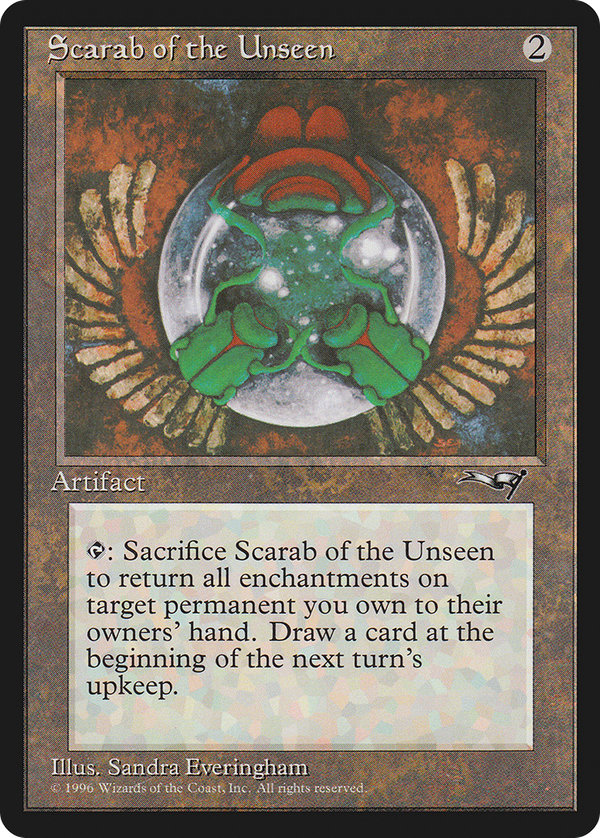
Rules text
 , Sacrifice this artifact: Return all Auras attached to target permanent you own to their owners' hands. Draw a card at the beginning of the next turn's upkeep.