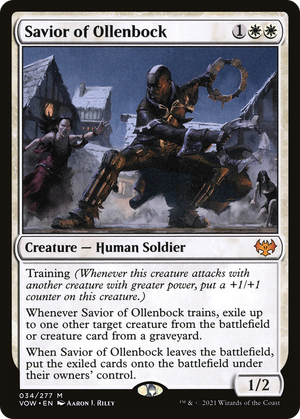
Savior of Ollenbock


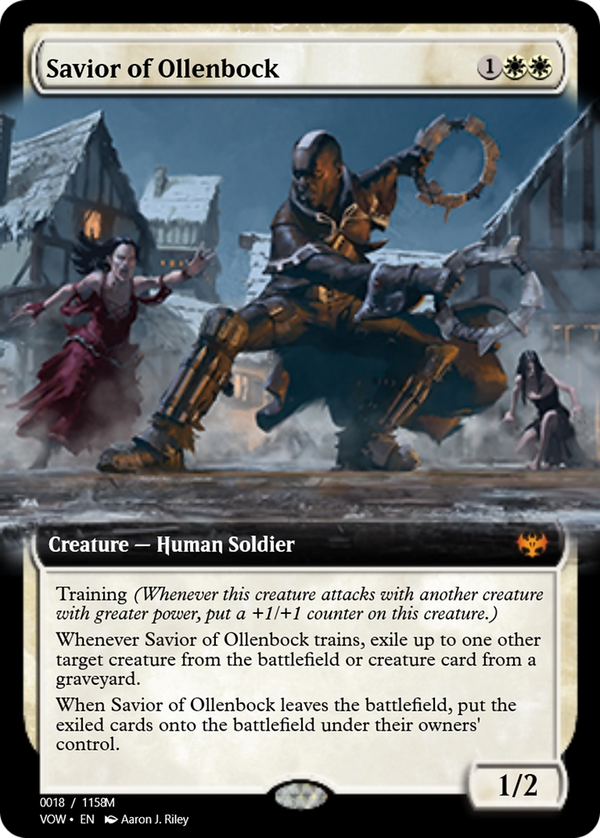
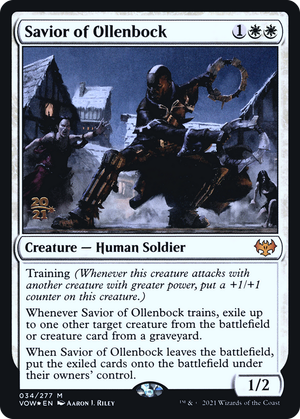
Training usually pays off in +1/+1 counters and nothing more; here the counter is a side effect, and the exile trigger is the whole engine. Every time this attacks alongside something bigger, it can pull a creature off the battlefield or straight out of a graveyard into a holding pattern, and it keeps doing it turn after turn as long as it survives combat. That reframes a fragile 1/2 into a repeatable removal-and-reanimation valve: exile your own graveyard's best threat and it comes back when the Savior dies, or exile an opponent's blocker and dare them to answer the Savior before their creature returns. The leaves-the-battlefield clause is the tension the design is built around, and it cuts in both directions at once. Those exiled cards are not gone; they are collateral, held hostage against the Savior's life, and when it dies the entire pile returns simultaneously under its owners' control. That symmetry is the cost of the engine: killing the Savior hands the opponent back every blocker you stole, which is the pilot's genuine risk, while the same trigger refills your own board with whatever you parked away, which is the reward. Both halves fire together, so there is no clean exit. Building around it means treating every exile as a temporary arrangement and sequencing the deck so that when the release finally comes, the board you rebuild outweighs the one you give back.