Savage Land Dinosaur


The green side of the landcycling design, and one of the cleaner statements of what that mechanic is for. A 7/6 trample body is a real payoff, the kind of top-end that closes a game on its own once it lands. But it never asks you to commit to that role when you draw it: the same card serves as the beater you want late and the fixing you want early. When your opening hand is short a color or a land drop, the  landcycling turns this into whatever basic you need and shuffles the miss away. The tension every fatty-with-cycling design resolves is the dead-card problem: a six-mana finisher stranded in an opening hand is a liability, and the discard-for-a-land clause converts that liability into a smoothing effect without asking the deck to run worse cards. Basic landcycling specifically (as opposed to plain landcycling that can find nonbasics) tethers the search to lands your manabase already runs rather than fetching a dual or a utility land, which caps the value while keeping the fixing reliable. A two-mode card whose modes never fight each other; that flexibility is why the template has kept resurfacing in green decks since the mechanic first appeared.
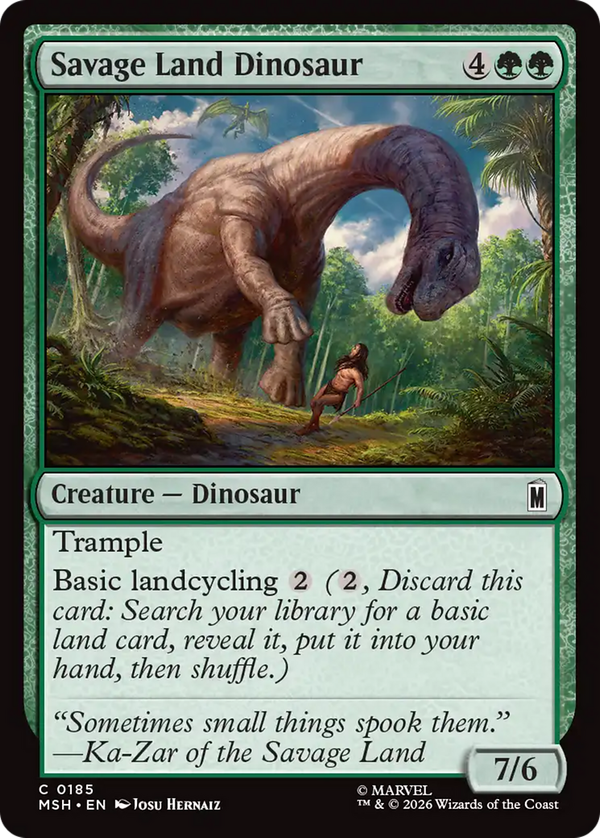
Rules text
(, Discard this card: Search your library for a basic land card, reveal it, put it into your hand, then shuffle.)