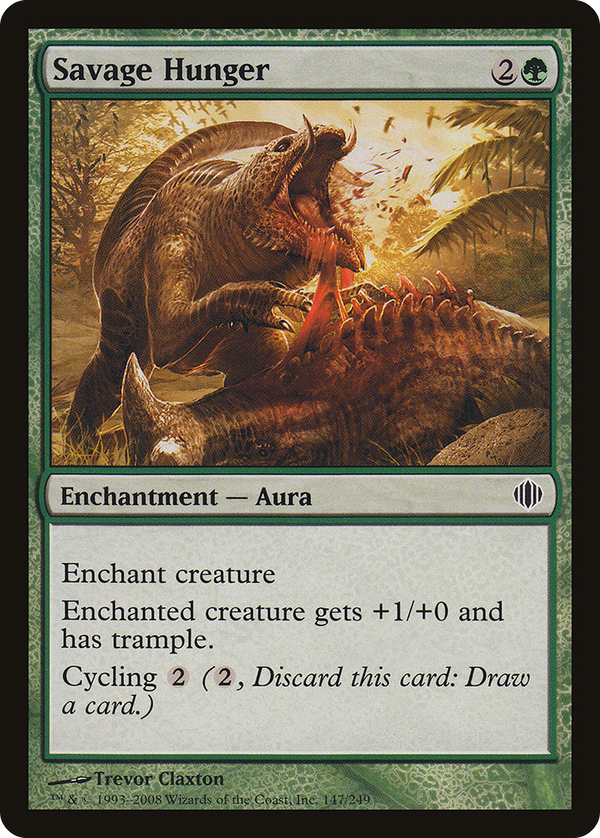
Savage Hunger


A single point of power barely registers; the trample and the cycling carry the whole transaction. Pasting trample onto a creature that already wants to attack changes the math of every block: a defender can still gang up, throw a high-toughness wall in front, or chump with a deathtouch body, but absorbing the hit no longer stops the damage from spilling through to the player. That converts a stalled beater into a clock. The cycling clause is the insurance policy that keeps the card from rotting in hand. Draw it without a worthwhile body to enchant and you pay two to trade it for a fresh card; draw it with a green fatty already on the table and you turn that body into a real threat to the opponent's life total. That two-mode flexibility lets it sidestep the failure that defines vanilla pump Auras, which punish you for drawing them at the wrong moment. Cycling on creature enchantments was a deliberate answer to the structural weakness of the type: the worst case for any Aura is a hand clog with no legal or useful target, and the discard-to-draw option converts that clog into card velocity instead. The design trades raw power for consistency, which is precisely the bargain a midrange green deck wants from a role-player.
Rules text
(, Discard this card: Draw a card.)