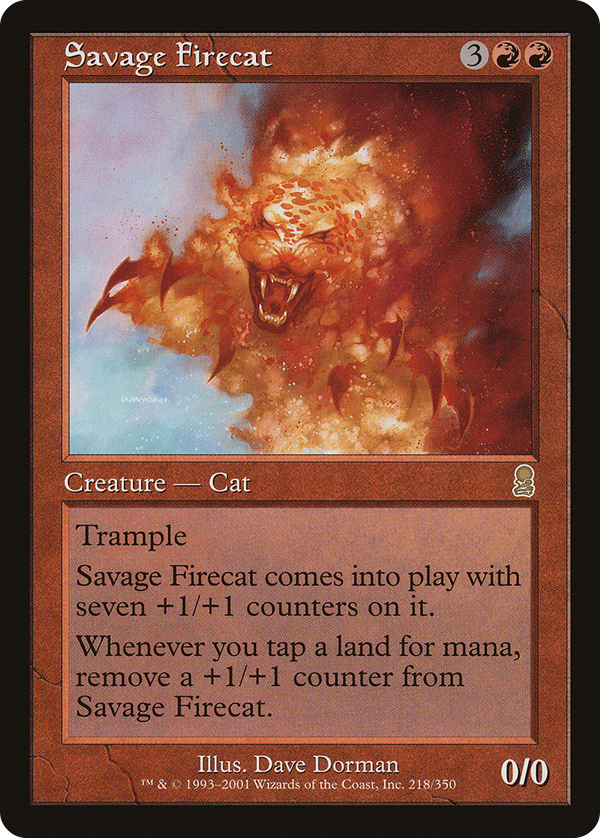
Savage Firecat


The clock is the catch. A 7/7 trampler for five mana would be a Constructed staple in almost any era, so the card hands you that body and then taxes it with every land you tap for mana: tap a land, lose a counter, watch the cat dwindle toward its printed 0/0. This inverts the usual ramp logic. Most red beatdown wants to flood the board and keep casting; here, the more you do, the smaller your threat gets, and a turn spent developing your hand is a turn the Firecat melts. The reward is for restraint and tempo: play it, swing, and win before your own tapped lands erode it. The spell-light, lean-curve builds of its era lined up with that ethos, favoring decks that could afford to leave lands untapped after deploying the cat. Punishing the very thing creatures usually want makes for an unusually honest case of design-by-self-restriction: the power is real, the body is genuinely large, and the cost is paid not in mana up front but in every subsequent decision to actually keep playing the game.