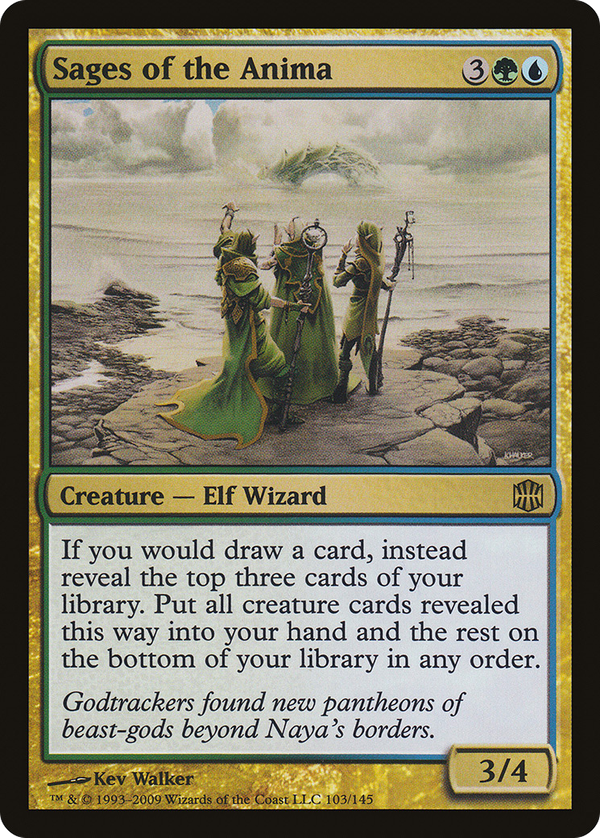
Sages of the Anima



The trade here is precise: you swap raw card-draw fidelity for creature-density filtering. Every draw stops being a single card and becomes a dig through three, with the noncreature cards (lands, removal, your other spells) sliding politely to the bottom. That makes this less a draw engine than a creature-summoning conveyor belt, and it means the cards it returns are guaranteed bodies. The cost is structural rather than incremental: you no longer draw lands off the top, so it punishes you for missing your drops as readily as it rewards a creature-stuffed deck. The replacement-effect wording is also where the wrinkle lives, because it rewrites every draw you would take, not just your draw step: a wheel, a cantrip, an extra-draw spell all funnel through the same three-card filter, and your noncreature half of the deck becomes effectively invisible to your hand. In a deck built almost entirely of creatures, it approximates a steady stream of fresh threats; in anything balanced, it starves you of the answers and lands you actually drew toward. That self-imposed deckbuilding tax is the whole design: it asks you to commit to a creature-saturated shell before it will function, and the more disciplined that commitment, the closer the conveyor runs to pure card advantage.