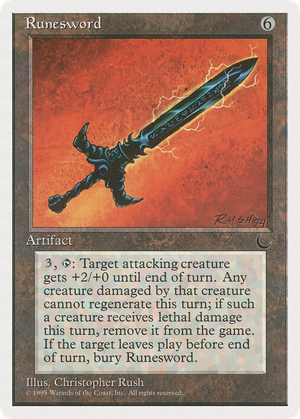
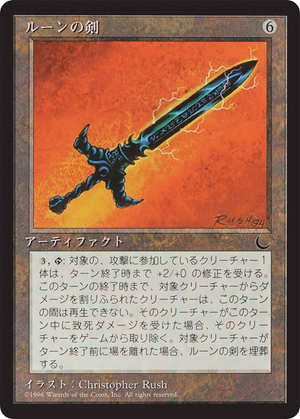
Runesword

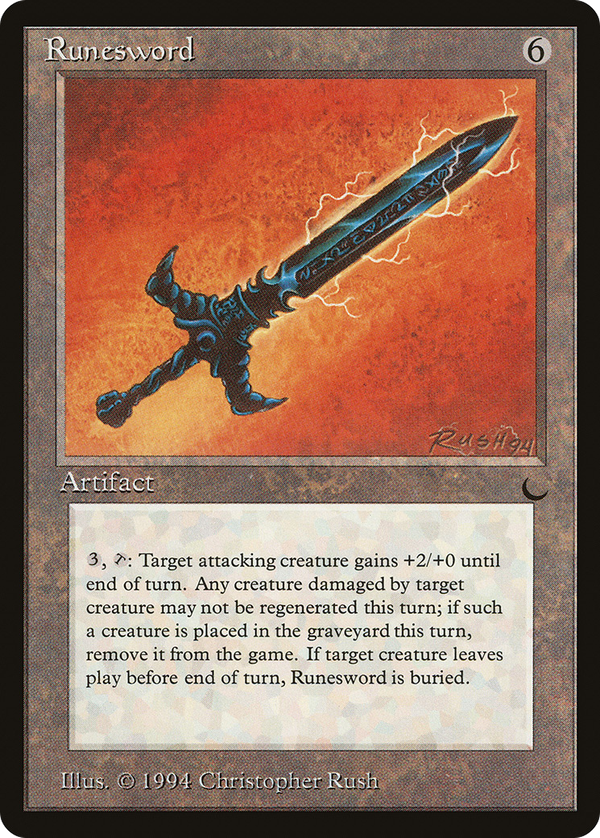
A six-mana artifact whose activation costs more than most creatures it would buff, this is early-design overreach: an effect bolted together from three separate punishment clauses that no contemporaneous combat math justified spending nine total mana to access. The +2/+0 is the bait; the real text is the trio of attached penalties (the targeted creature shuts off regeneration on what it hits, exiles anything it kills, and the whole apparatus self-destructs the moment the boosted creature leaves play). That self-sacrifice rider is the structural fail-safe, the era's clumsy way of pricing an effect this open-ended: the card wants to be a repeatable exile-and-no-regen engine but had to be leashed so it could not become one. The result reads like a designer trying to write a removal-adjacent combat trick before the templating language for such things existed, so every consequence had to be spelled out longhand. Exiling a creature instead of letting it die is the genuinely forward-looking part: it predates the keyword cleanup that would later standardize this kind of replacement effect, and seeing it here, attached to attacking creatures and gated behind a steep activation, shows how cautiously the game once handled effects that dodged regeneration and graveyard recursion at once. It is a museum piece of how much friction designers once built in to keep a powerful idea from being good.
Rules text
 ,
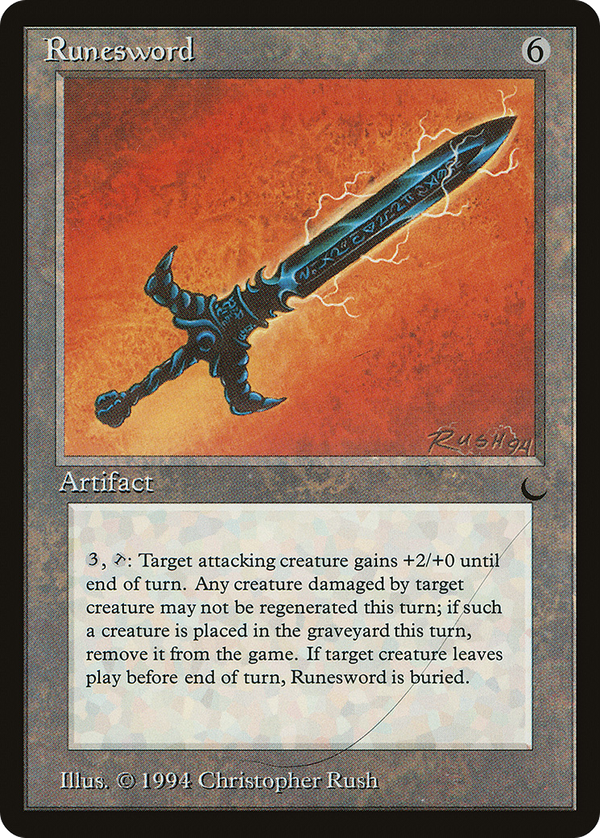
,  : Target attacking creature gets +2/+0 until end of turn. When that creature leaves the battlefield this turn, sacrifice this artifact. If the creature deals damage to a creature this turn, the creature dealt damage can't be regenerated this turn. If a creature dealt damage by the targeted creature would die this turn, exile that creature instead.