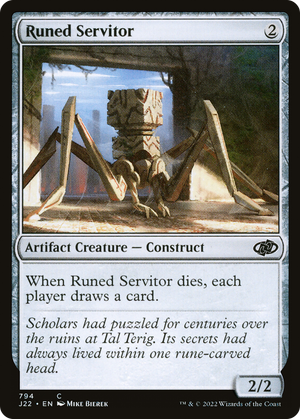
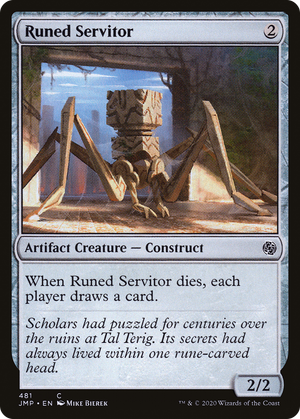
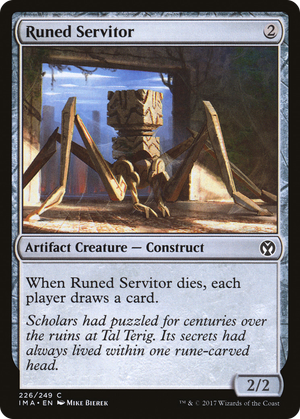
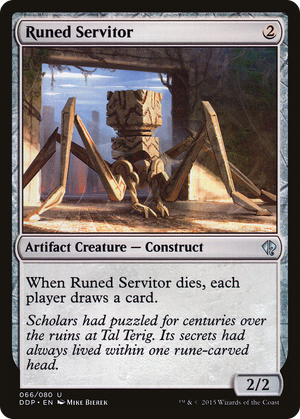
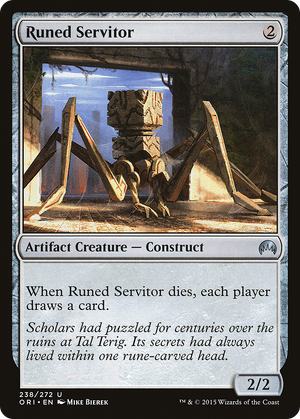
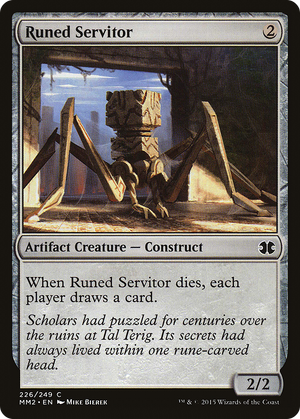
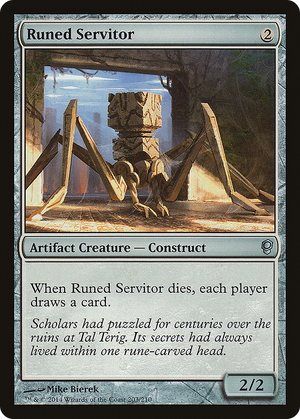
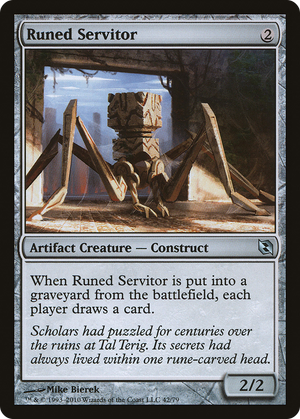
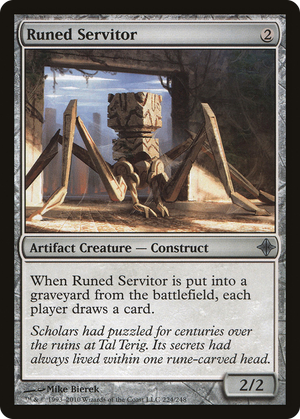
Runed Servitor

Symmetry on paper rarely survives contact with practice, and a death-triggered group draw is the cleanest illustration of the gap. The 2/2 body is plain enough to slot into any deck (the colorless cost asks nothing of your manabase), but the body is not the point: the whole design lives in the trigger. When it dies, each player draws, which reads as a wash until you notice who controls the death. You choose when to chump-block, when to feed it to removal, when to throw it to a sacrifice outlet; the refund arrives precisely when a fresh card is worth more to you than to your opponent. The discipline is built into that same clause. Against an empty-handed opponent topdecking for an out, handing them a card is a genuine cost, so the trigger quietly punishes a careless crack. Set it beside the older static group-draw engines like Howling Mine, and the difference is structural: those tax you every upkeep, run for both sides indefinitely, and never let you pick the moment. This one fires once, on your timing, and stops. That single-shot, self-scheduled shape is why it behaves like neither a perpetual draw engine nor a simple cantrip-on-a-stick. The construct draws its cards by dying, and the only question it ever poses is whether the moment of death favors you more than it favors them.
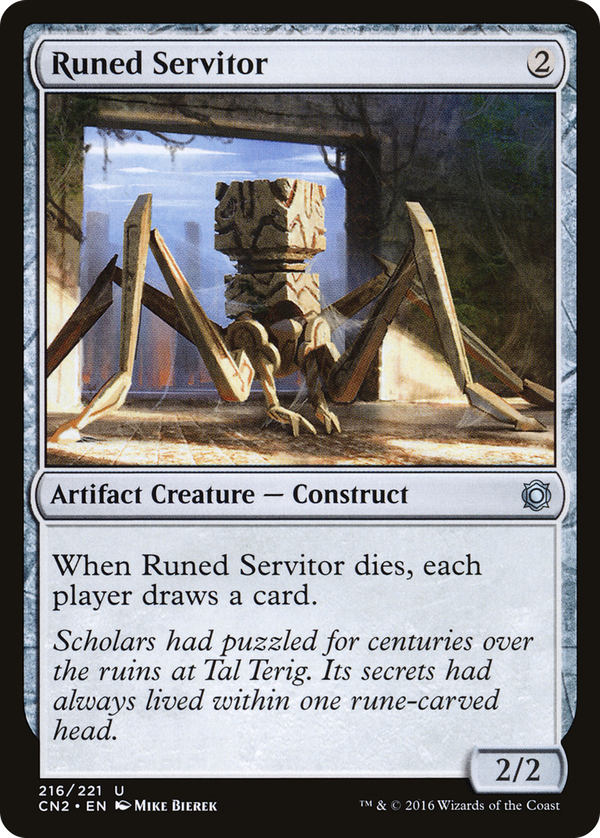
Rules text
Format Status
More formatsFewer formats
Other printings
- Jumpstart 2022#794
- Jumpstart#481
- Iconic Masters#226
- Duel Decks: Zendikar vs. Eldrazi#66
- Magic Origins#238
- Modern Masters 2015#226
- Conspiracy#203
- Duel Decks: Elspeth vs. Tezzeret#42