Runaway Boulder

Six mana for six damage to a single creature is a losing rate by any measure, and the design knows it: the value lives in the flash keyword and the escape hatch stapled underneath. Flash turns a slow, overpriced removal spell into a combat and end-step ambush, killing an attacker mid-swing or answering something an opponent just resolved, and being an artifact rather than an instant means it can be tutored, blinked, or fed into artifact-matters shells that a burn spell would never touch. Cycling keeps it from rotting in the games where six mana for one dead creature is a trade you would never make: draw it into the wrong matchup and it becomes two mana for a fresh card instead of a stranded brick. The tension the design resolves is the perennial problem with expensive, narrow removal, which is only ever great when you need exactly this effect and useless otherwise. Bolting on both flash and cycling pays down that variance from both ends: flexibility on when the removal happens, and an exit when it should not happen at all. The target line (a creature an opponent controls) is the one clean restriction, ruling out point-blank use on your own board and keeping the six damage honestly aimed across the table; the artifact body still counts as an artifact for everything else, so it remains fine sacrifice fodder or blink fuel even after the enters trigger has done its work.
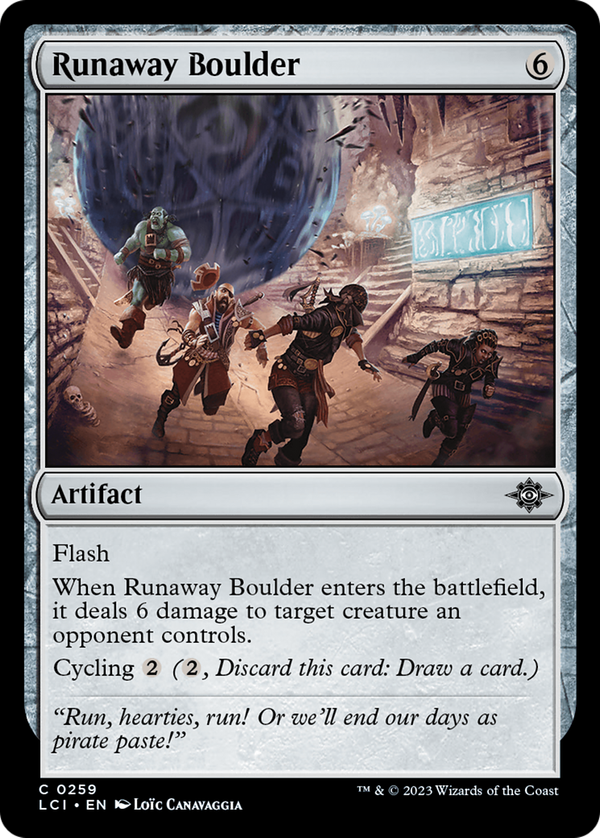
Rules text
 (, Discard this card: Draw a card.)