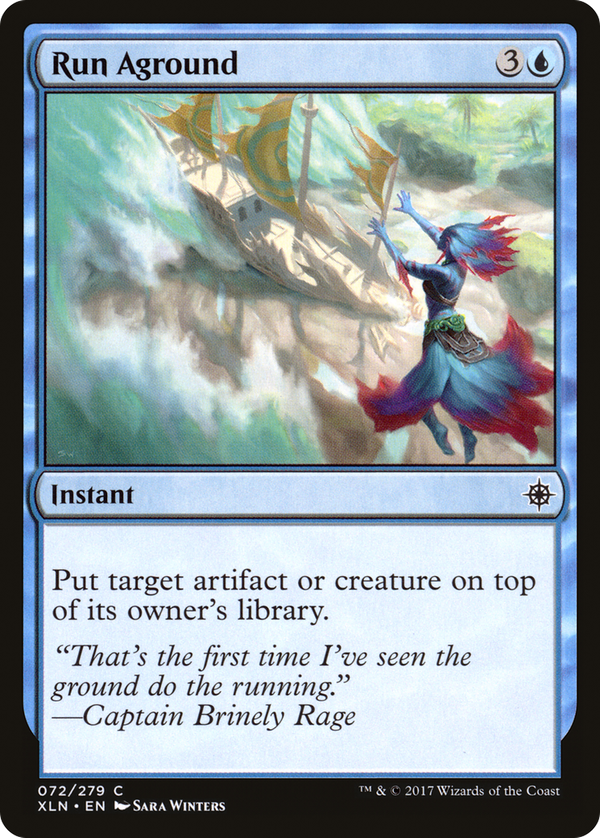
Run Aground


Where the target lands is the whole design: not back in hand, but on top of its owner's library. Against an opponent's permanent, that placement is a soft one-shot denial effect wearing a tempo-bounce costume. A standard bounce hands the threat back and frees the opponent to recast it alongside a fresh draw; putting it on top instead strands them on a known top card and eats their next draw step. They spend a card and their mana replaying the thing you already answered, and see nothing new for the turn. That stolen draw is the only real edge over a cheaper return-to-hand spell, and the price makes it a hard sell: four mana is steep for a tempo play, and instant speed alone is thin justification when so many two-mana options do the returning for less. The flexible target line (artifact or creature, at instant speed) buys reach a color-locked or type-locked answer lacks, but it never outruns being overpriced for what it accomplishes. Aim it at your own board and the top-of-library clause turns against you: you get to reset a permanent and cash its entry effect again, but you also spend your following draw redrawing what you already owned. That self-targeting line exists as a corner case, not the axis the card is built around. What it offers, in the end, is a way to buy exactly one turn by robbing an opponent of exactly one card.