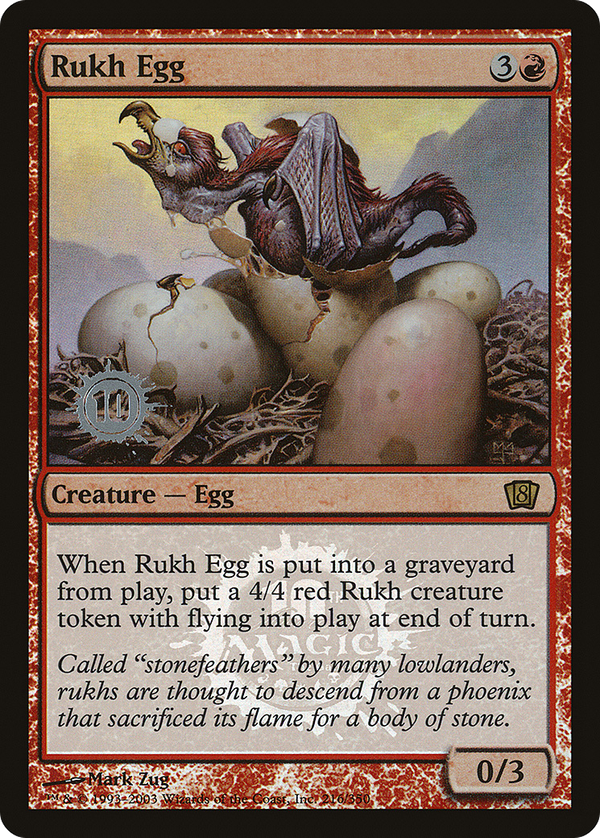
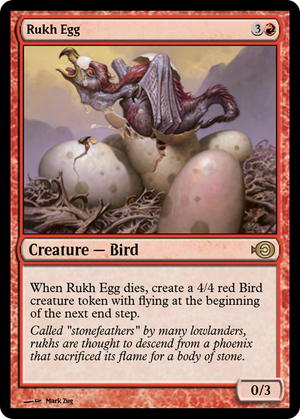
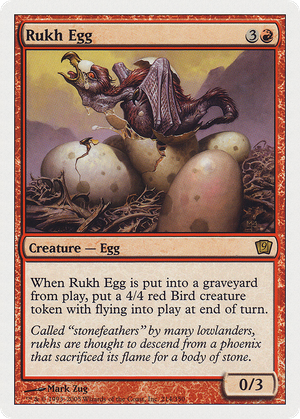
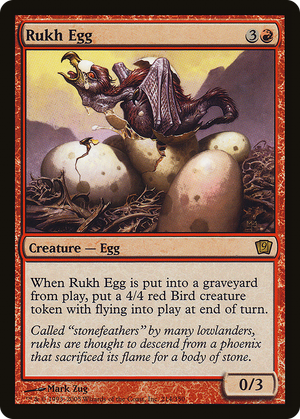
Rukh Egg


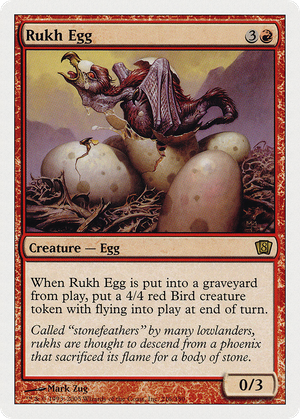
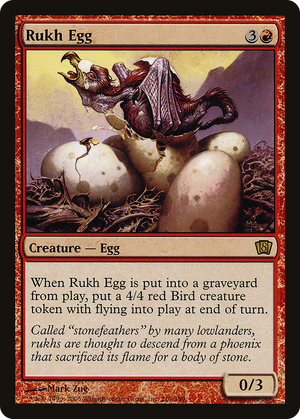
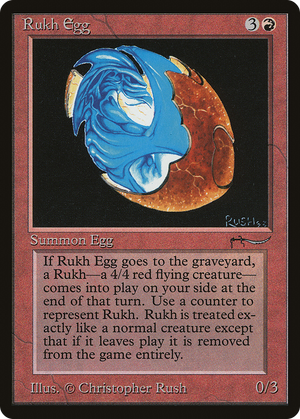
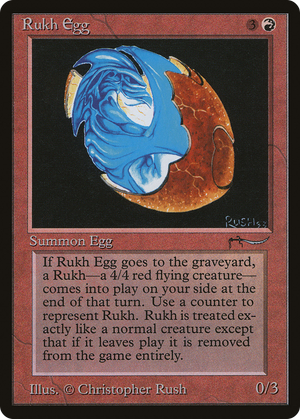
The original death-trigger payoff, printed before the templating that would later make this kind of effect routine. The design logic is unusually pure: a fragile body that punishes its own removal, trading a four-mana 0/3 for a 4/4 flyer on the following end step. The delay is the whole idea. By deferring the token until the next end step rather than triggering immediately, the card opens a window where the opponent has killed the egg but cannot race the bird before untap, which is exactly the tempo math a sweeper or a chump-block answer has to solve. The deferral also changes how a sacrifice outlet reads the card: the body still dies on demand to Goblin Bombardment or Ashnod's Altar for whatever that outlet pays, but the bird does not arrive until the end step regardless, so the reward is locked to a clock rather than to the moment of sacrifice. Every "this body's job is to die, and the death is the payoff" design since (Dragon Egg, Roc Egg, and the wider family of self-replacing tokens) shares this template: a creature priced so that its removal is the loss the opponent eats, not the loss you take. The original printing predated the modern delayed-trigger language and required errata to function as intended, which is part of why Arabian Nights cards sit at the awkward seam between Magic's earliest design instincts and the rules architecture that grew up to support them.