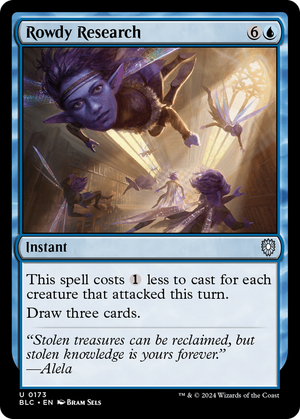
Rowdy Research


A seven-mana draw-three is a joke; the trick to making it playable is a scaling cost that pays itself down when the board is already busy. Every creature that attacked this turn shaves a mana off the price, and the crucial word is "attacked," not "you attacked." The reduction counts any creature that swung, which means the deck casting this is not always the one that attacked: a control shell that eats an alpha strike from a token swarm can fire the reload for a single blue mana on the opponent's turn, letting the aggressor's own commitment fund the answer. On the proactive side, instant speed lets a go-wide deck attack with the team, resolve combat, and cast this in the second main phase with the discount already locked in, refueling the same turn it emptied its hand. That is the real flexibility here: the cost cares about the state of the battlefield rather than about whose battlefield it is. Unpaid, it is a seven-mana brick nobody wants, and that steep worst case is deliberate; the payment structure only rewards a turn where creatures have already traded blows, so the card asks for a board full of attackers before it asks for anything else. The swarm becomes the currency for its own second wind, whether that swarm is yours or the one that just hit you.
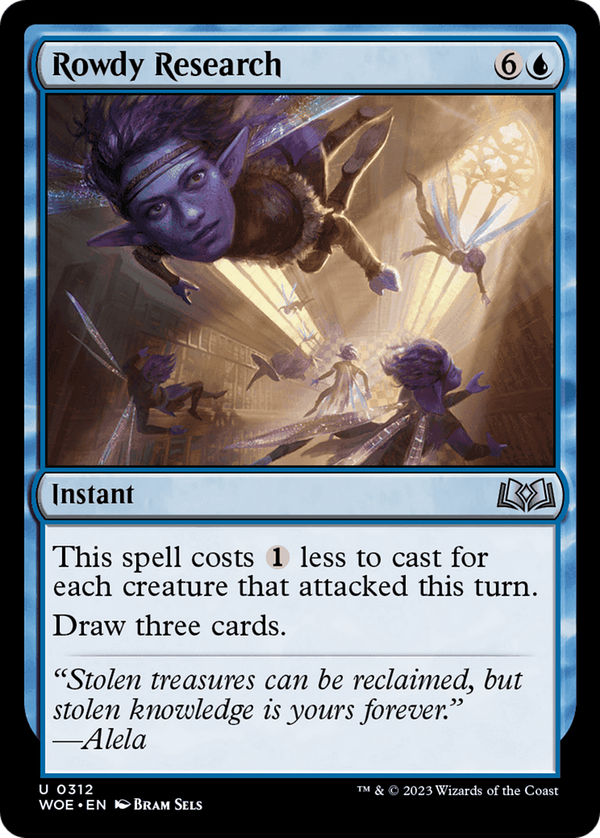
Rules text
 less to cast for each creature that attacked this turn.
Draw three cards.
less to cast for each creature that attacked this turn.
Draw three cards.