Rottenmouth Viper


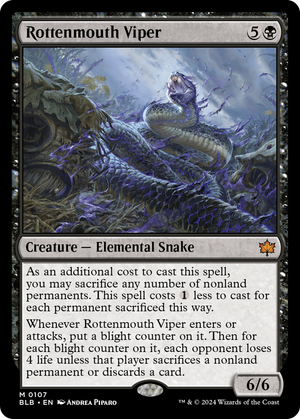
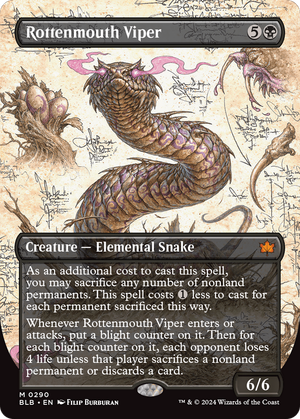
The design bet here is that a sacrifice-based deck accumulates more disposable permanents than it knows what to do with, and this turns that surplus into a discount on a 6/6 that punishes an opponent every time it touches the battlefield or swings. The cost reduction and the payoff run on the same fuel from opposite directions: your permanents pay to cast it, theirs pay to survive it. What makes the recurring drain nastier than a flat life-loss number is the escalation baked into the blight counter. Each entry or attack adds a counter first, then bills for every counter on the creature, so the second attack is not a repeat of the first: it is worse, and the third is worse than that. And the tax it imposes is a genuine choice with no clean answer, since each opponent must lose four life per counter, sacrifice a nonland permanent, or discard, which means an attack this creature survives strips a board, empties a hand, or bleeds a life total on a slope that only steepens. Left unanswered, it converts every combat step into a Smallpox-style resource attrition that compounds. The 6/6 body is almost incidental to that engine; what earns the slot is that it forces three bad decisions per turn cycle onto every opponent at once, and the sacrifice discount means it can arrive far ahead of its printed six mana.
Rules text
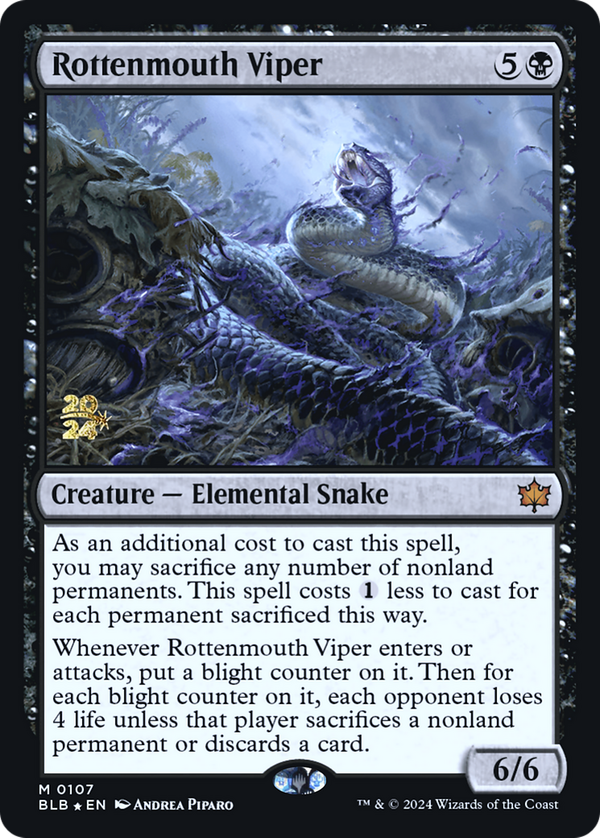
 less to cast for each permanent sacrificed this way.
Whenever this creature enters or attacks, put a blight counter on it. Then for each blight counter on it, each opponent loses 4 life unless that player sacrifices a nonland permanent of their choice or discards a card.
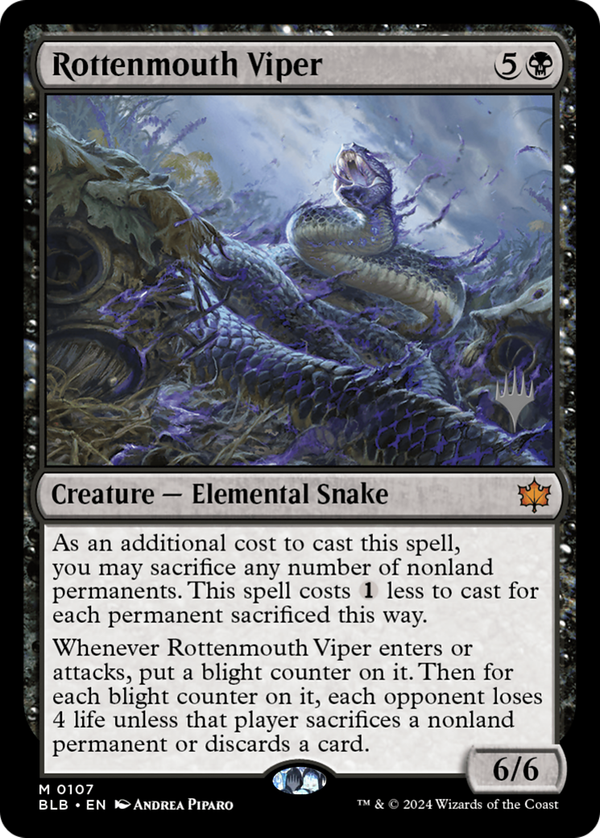
less to cast for each permanent sacrificed this way.
Whenever this creature enters or attacks, put a blight counter on it. Then for each blight counter on it, each opponent loses 4 life unless that player sacrifices a nonland permanent of their choice or discards a card.