Rot Farm Skeleton



The recursion is the whole engine, and it bills itself in your own library: every trip back from the graveyard mills four cards, so the body is rented rather than owned. That self-mill is not incidental fuel paid grudgingly; it is the resource the card spends to keep coming back, which means the deck that wants this creature treats a thinning library as an asset rather than a clock running down. The 4/1 frame and the can't-block clause keep it pinned to a single role: it dies to almost anything, offers nothing on defense, and exists to throw four power across the table, fall over, and stand back up next turn for another four mana and four cards off the top. The sorcery-speed restriction on the reanimation is what stops the body from being genuinely oppressive: no end-step reset, no reanimating it in response to a board wipe, only a clean main-phase commitment that the opponent can see coming. What it offers in exchange is grind, a reusable beater for graveyard-centric Golgari shells that mill themselves toward a payoff, where the four cards lost each cycle are cards they wanted in the bin anyway. It is a reanimation effect that asks for no setup: no sacrifice outlet, no enabler beyond mana and a willingness to burn through your own deck, answering the question of how a self-mill plan can also apply pressure rather than just dig.
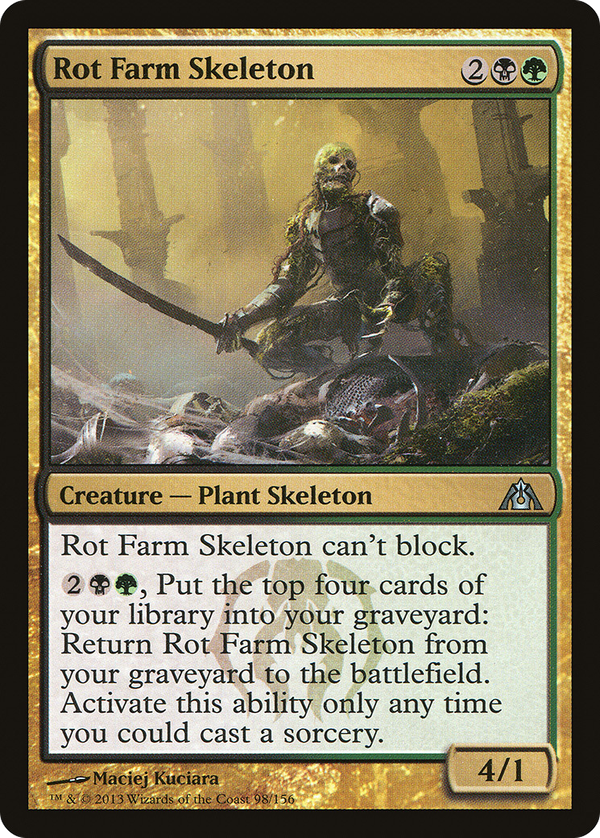
Rules text
, Mill four cards: Return this card from your graveyard to the battlefield. Activate only as a sorcery.