Ritual of the Machine


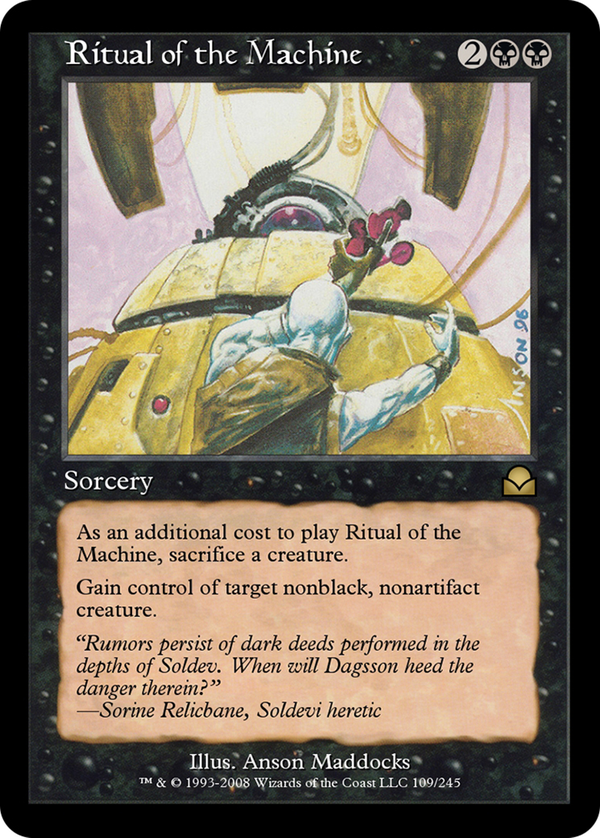
The design lesson here is in the cost line, not the effect. Mind Control taught a generation that permanent theft costs five mana and a card; this earlier take cuts the rate to four and demands a creature on the altar instead. That sacrifice clause is the structural pressure valve: it turns a tempo-positive steal into a body-neutral one, since you trade one creature to take a (usually better) one. The math only swings in your favor when the thing you point at is bigger, scarier, or harder to kill than the fodder you feed it, which makes the spell a deliberate trade-up rather than a free swing. The targeting restrictions matter too: nonartifact, nonblack narrows the pool in a way that reads as flavor (black does not steal its own) but functions as a balancing rail, keeping the spell from snatching the artifact bombs and black finishers that defined its era. What makes the sacrifice cost more than a tax is the way it rewards a board already built to spend creatures: tokens, the recently summoned, anything you were going to lose anyway becomes the toll for upgrading into the opponent's best legal creature. It is a theft spell built for a deck that treats its own creatures as currency, and the additional cost is the entire reason the rate works.