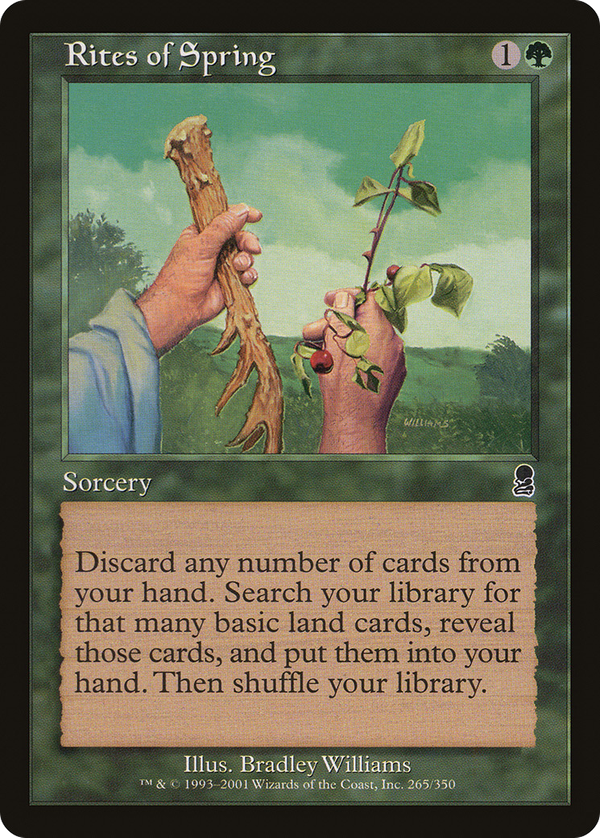
Rites of Spring


The discard is the engine; the land-fetching is the polite half of the design. The numbers stay symmetrical (discard a card, get a basic), so on a card-count basis this is a wash that only smooths out mana screw and color issues: discarding excess lands hands you basics back, not action. The detour that gives the card its identity is where those pitched cards land. They are not gone; they become flashback fodder, threshold counters, and recursion targets, while your hand refills with the basics you actually want to draw. That reframes the whole exchange. You discard spells you can buy back later to thin toward a clean curve, or you discard surplus lands to trade them for the specific basics your deck needs, and either way the yard fills on your terms. Restricting the search to basics is what holds the rate in check: this is filtering and fixing, not a tutor, and treating it as either undersells the third axis. Stripped of a graveyard payoff it is a fair-to-middling card-quality smoother whose ceiling is capped by what you can do with a stocked yard. Built around one, it is a green discard outlet that refills your hand with lands as a side benefit, and the reason it cares that the cards go to the graveyard rather than the bottom of your library is the entire point.