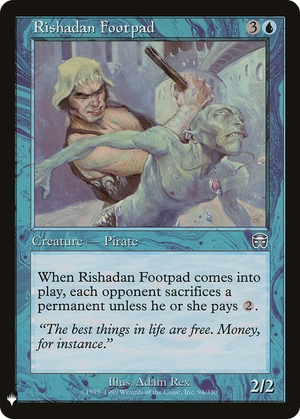
Rishadan Footpad


Blue does not destroy. It makes you choose, and it makes the choice cost you something either way. That color-pie discipline is the engine behind this body: the enters trigger offers an opponent two losing options, hand over a permanent of their own choosing or bleed two mana to keep it. The second clause is what separates a tax from removal. The opponent decides what to lose, so the trigger never reads a board state perfectly, but the ransom lands hardest exactly when they are tapped out or curving on a tight budget, which is precisely the moment a tempo deck wants to be applying pressure. The structural honesty is that the 2/2 and the toll are priced as one package: four mana buys a fragile attacker plus a one-time tariff the opponent can simply buy off if they have spare mana lying around. The design lives or dies on whether you cast it into an empty pool. This same Rishadan toll structure runs through the merchant-folk pirate suite that gives the card its name, a fantasy built entirely around making other people pay to do anything. Each piece asks opponents to pay or sacrifice rather than ripping something away outright, a cleaner read on what early-era blue was allowed to do than its reputation as the counterspell color usually suggests.
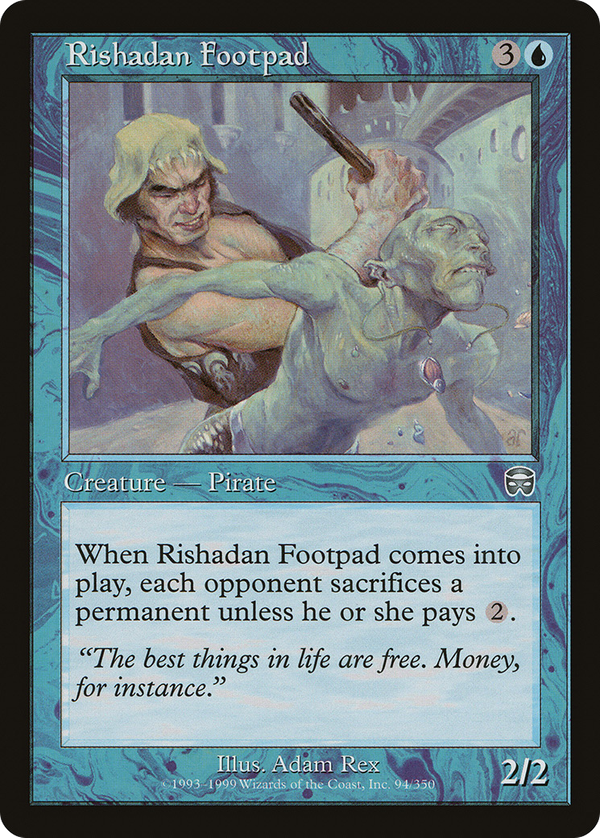
Rules text
 .
.