Rictus Robber


The value here is conditional twice over, and that is the interesting part. The token trigger fires only if a creature already died this turn, which sounds like a limitation but is really a scheduling problem the card hands you to solve. Plot is the tool for solving it: exile the Robber early, spend a turn or two setting up the death, and let it return as a sorcery on the turn a body has already hit the graveyard. Paying the plot cost decouples when you spend mana from when you collect the payoff, so you can bank the creature during a lull and cash it in exactly when your board has traded or you have sacrificed something. Hard-cast, it forces awkward sequencing: you need a death to occur before the Robber resolves in the same turn. Plotted, it enters without a mana commitment, which frees every remaining mana that turn to trigger the death condition first. It rewards the same sacrifice-and-recur game aristocrats decks already want to play, stacking a scheduled two-for-one on top of a 4/3 that carries real pressure on its own. The design is a small lesson in how plot changes evaluation: an enters-the-battlefield condition that reads as fragile becomes reliable once you control the turn on which it resolves.
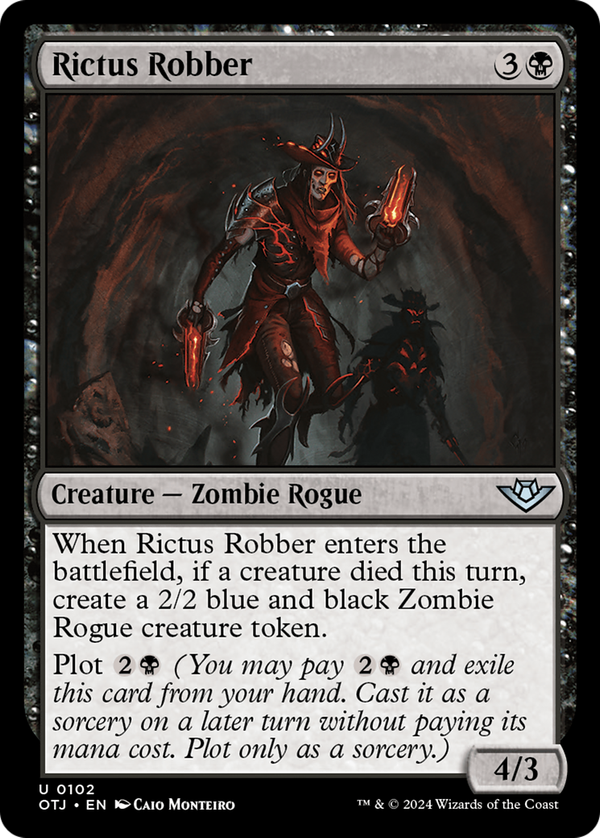
Rules text
 (You may pay and exile this card from your hand. Cast it as a sorcery on a later turn without paying its mana cost. Plot only as a sorcery.)