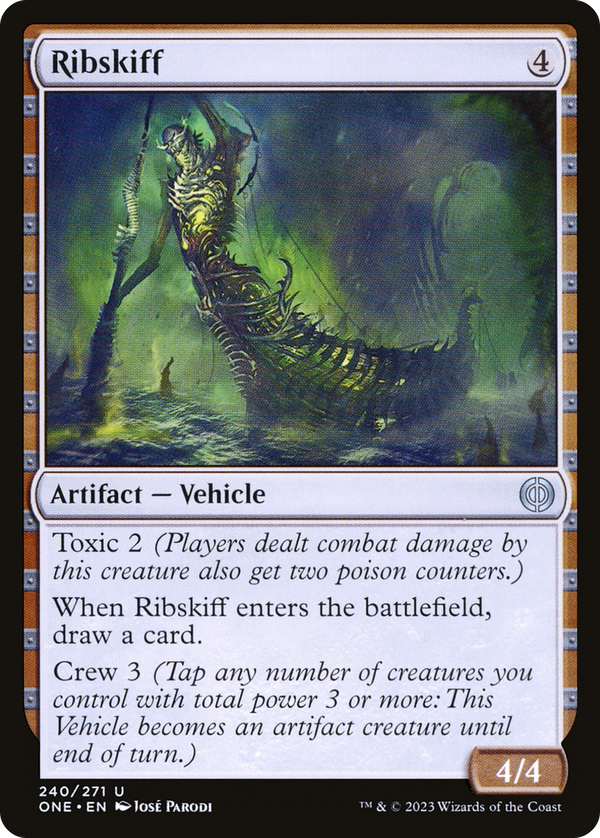
Ribskiff

Vehicles rarely bring their own reason to enter play, and that is the quiet trick here: the crew requirement asks you to spend creatures to attack, but the enter-the-battlefield draw means the card pays for its deployment before anyone taps a single creature to move it. That inversion matters. A Vehicle you have to work to activate is a poor topdeck; a Vehicle that replaces itself on arrival is one you never regret casting, whether or not it ever swings. Toxic 2 then changes what the 4/4 body threatens: this is not a race-to-twenty clock but a poison clock. The math is close to a wash on paper, since ten poison from Toxic 2 still takes five connections, exactly what a 4-power body needs to deal twenty damage, but the two counters per hit chip toward the shorter finish line while any incidental poison your deck already deals stacks on top. That reframes the crew tax: a Vehicle you crew every turn to grind out poison counters dodges summoning-sickness through whatever board you already have while sidestepping the sorcery-speed sweepers that catch creatures parked between combats. The design sits in how the three pieces cover for each other: the draw removes the cost of committing, the poison hands the mediocre stat line a win condition worth chasing, and crew keeps the whole thing off the battlefield as a creature until the turn you actually need it there.