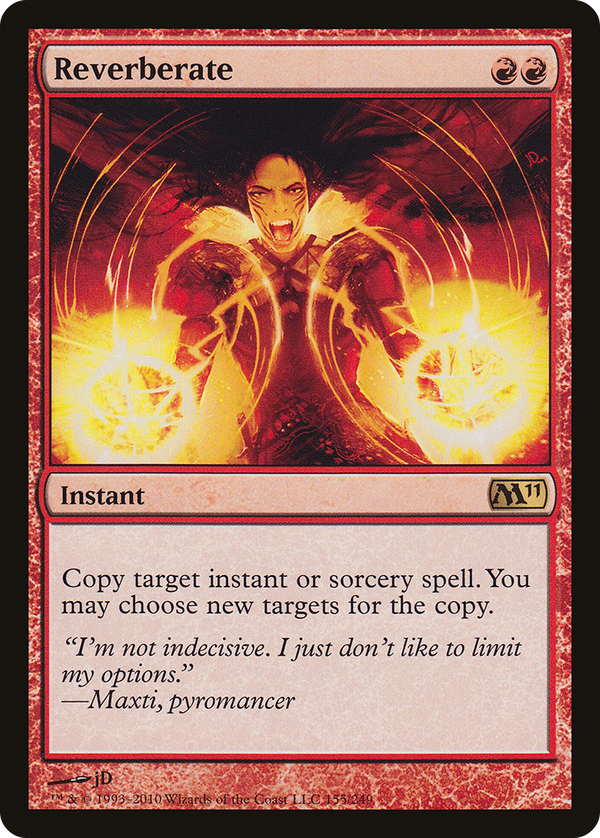
Reverberate

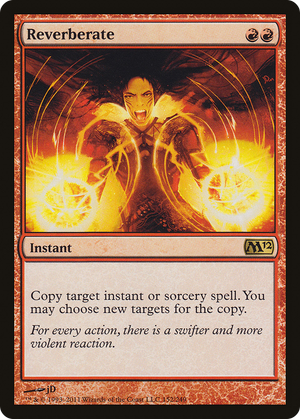
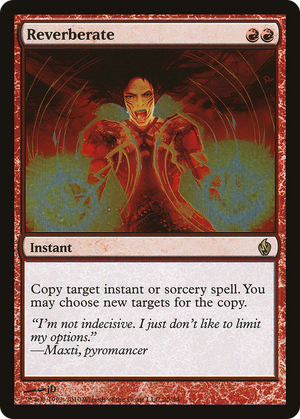
The cleanest expression of the Fork principle: two red mana, and an instant or sorcery already on the stack gets copied onto the stack for you. The contrast with the original Fork is subtle but real. Fork forces its copy to be red regardless of the source spell's color; Reverberate leaves the copy in the original spell's colors, which matters only at the margins (color-matters triggers, a copied spell that asks about its own color) but reads as the cleaner intent. Both run on the same engine, and both carry the same dependency. The clause doing the real work is the new-targets option, but it is important to be precise about what it does: copying a spell never touches the original. An opponent's removal aimed at your creature still resolves and still kills your creature; what the copy buys you is a second instance you can point wherever you like, so you can mirror that removal back at one of their creatures while yours dies anyway. The same goes for a copied draw spell or burn spell: you are adding an effect, not deflecting the existing one. The friction is structural and unavoidable: the card holds zero value until something worth copying is already on the stack, and that something must be an instant or sorcery, so a board full of permanent-based threats offers it nothing. That dependency is the whole strategic axis. It thrives against decks leaning on a single high-impact spell and sits dead in hand against a stream of cheap, redundant effects where no individual copy clears the cost of two red.