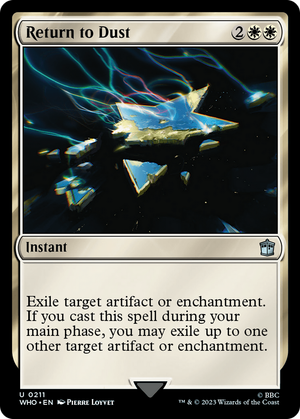
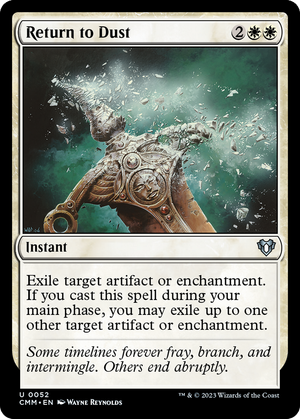
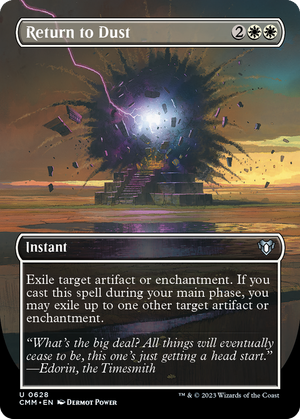
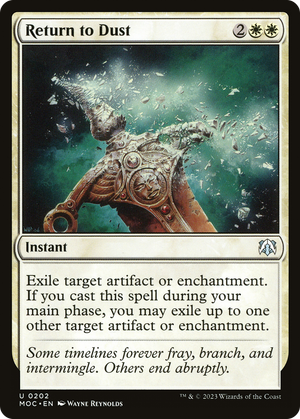
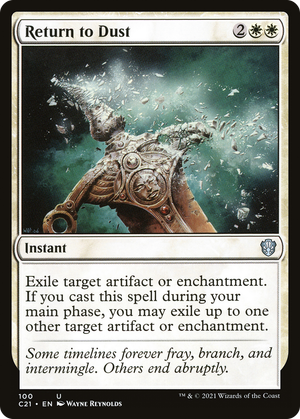
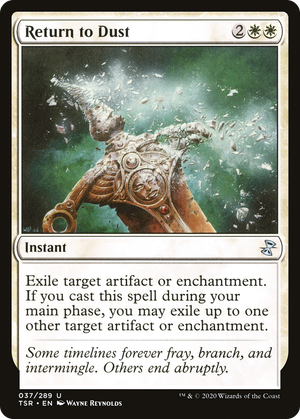
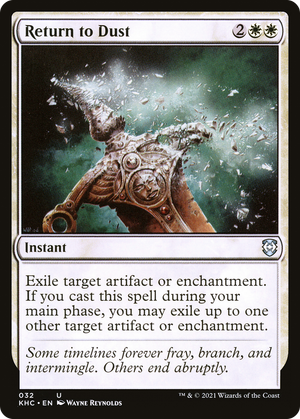
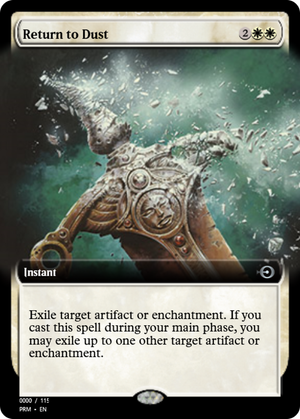
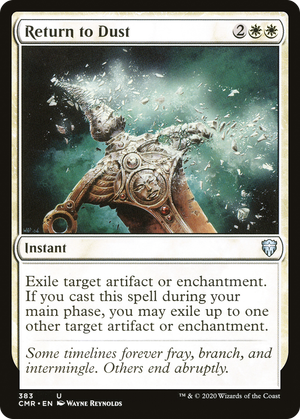
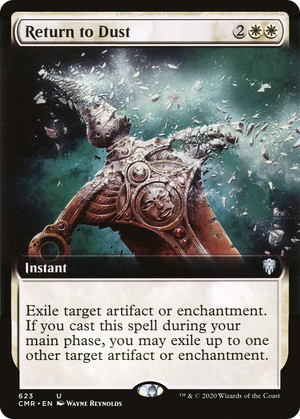
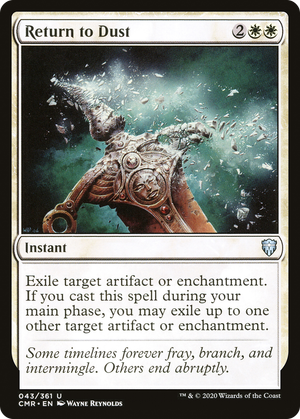
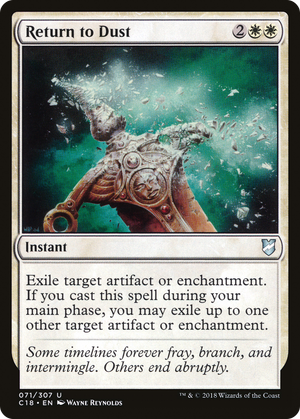
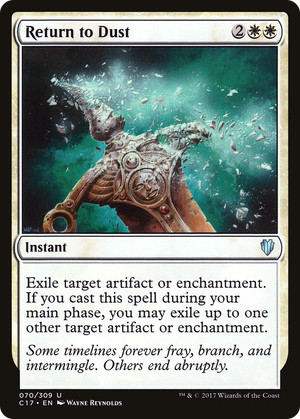
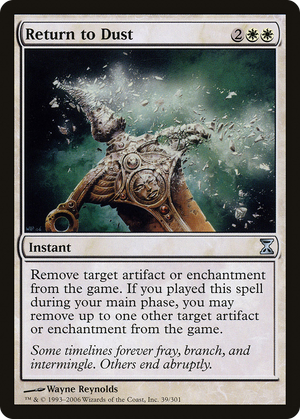
Return to Dust


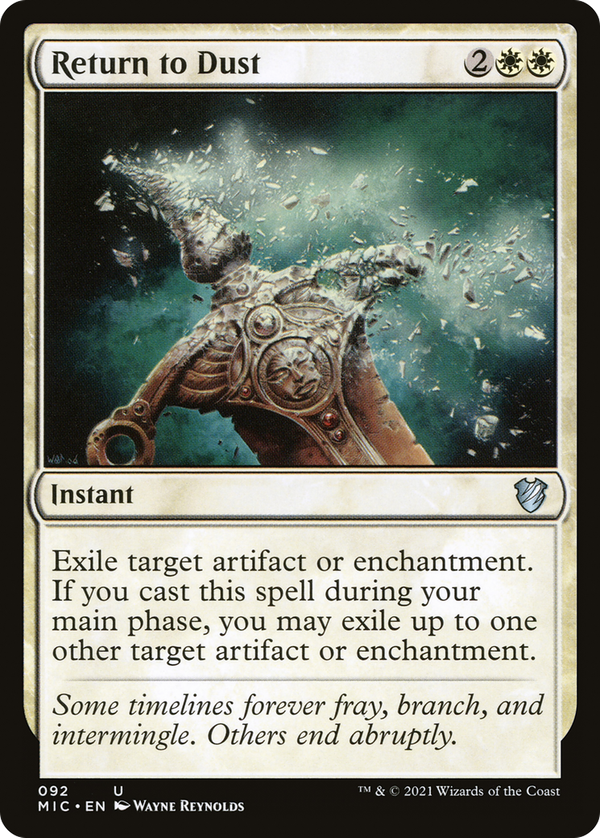
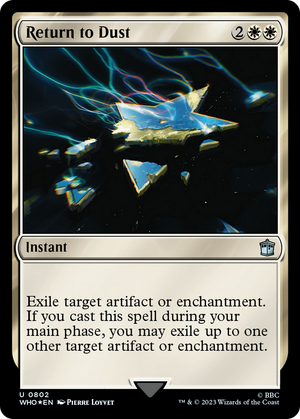
Disenchant gave white a clean answer to one artifact or enchantment; this design takes that template and asks what white should pay for exile and a second target. The exile clause is the structural upgrade: where most cheaper removal merely destroys, this answers regenerating, indestructible, and recursion-prone permanents by removing them from the game entirely, and it does so at instant speed regardless of when you cast it. The two-for-one rider is the real subject, and the way it is gated tells you everything about the card's discipline. Splitting a single removal spell across two targets is enormous value, so the design fences it behind the main phase: you only get the second exile if you cast on your own turn, which means you trade away the reactive flexibility instant speed normally guarantees. Hold it up on the opponent's end step and it still exiles, cleanly and permanently, but only one threat; commit it during your turn and it can clear two, at the cost of the surprise. The removal itself never bends. What bends is whether you spend the spell reactively for a single target or proactively for two. That toggle, decided by when you cast rather than what you target, is a cleaner expression of cost-for-power than most catch-all removal manages, and it is why the card has outlasted dozens of cheaper, narrower disenchant variants without ever changing what it fundamentally does.