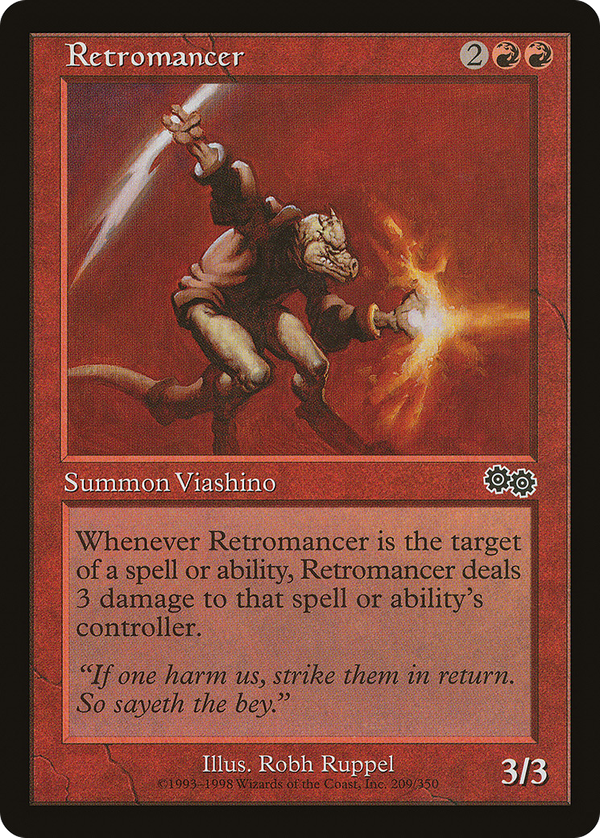
Retromancer


Punishment as a deterrent rarely works in a card game, because the cost of triggering the punishment is paid by the player who chose to act, and a player who reads the board correctly simply declines to act. This is the gimmick laid bare: a 3/3 body that dares opponents to remove it and burns them three for the privilege. The trouble is that almost nobody takes the dare. A removal spell that would otherwise kill it still kills it, three life is a cheap toll for clearing a four-mana creature, and the more common response is to ignore it entirely and win around it. What it actually does is tax the targeted answer specifically, not interaction as a category: an opponent who edicts you, bounces with a non-targeted sweep, or simply attacks past it pays nothing. The design is honest about its narrow lane (only targeted spells and abilities trip the trigger, and the spell's controller takes the three, not the source), which means the threat lands precisely against the surgical, low-investment removal it most wants to discourage. Against everything else, the punishment clause sits idle and you are left with a 3/3 holding up a sign that reads "please target me." It belongs to red's long fascination with creatures that retaliate when interacted with, and stands as a clean early example of how hard that effect is to make matter when the opponent gets to choose whether it ever fires.