Rent Is Due

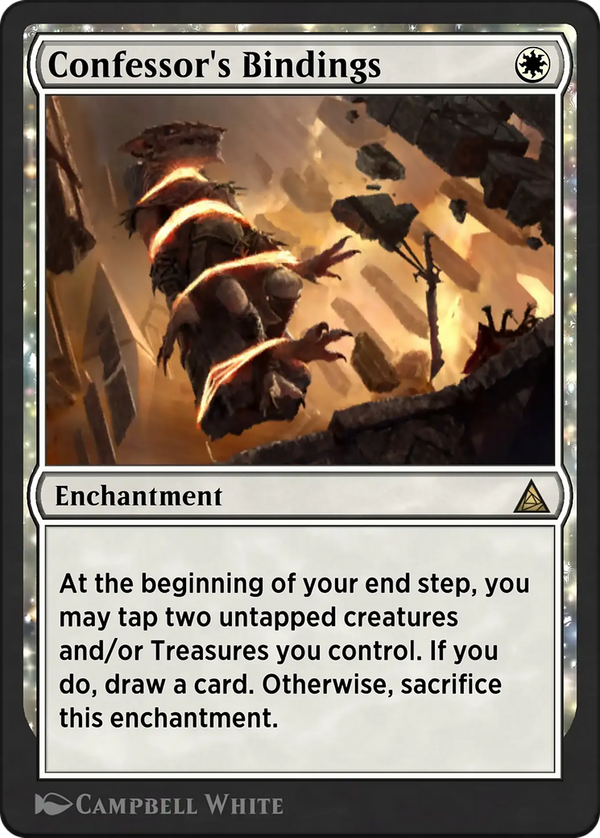
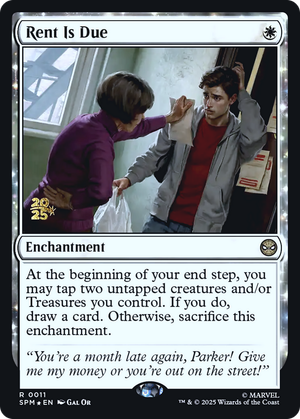
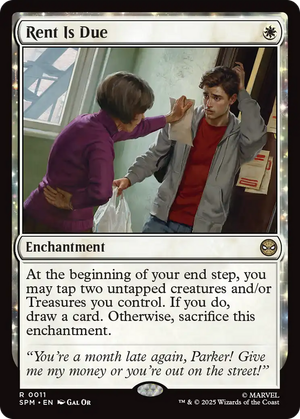
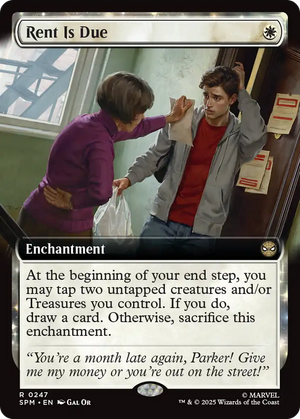
A repeatable draw that charges rent every turn: keep two creatures or Treasures available at your end step or the enchantment falls apart. The tap cost is what pays for the card, and it bites harder than it reads. Tapping two creatures on your own end step means the bodies you spent for the card are not there to block on the opponent's turn, so every card drawn is bought with defensive posture. Treasures are the escape hatch: tap two of them to satisfy the trigger and the creatures stay up. Because tapping a Treasure does not spend it (it simply untaps with the rest of your permanents next turn), a board with a couple of idle Treasures can feed the rent indefinitely at no real cost, which is where the card quietly becomes an engine rather than a tax. And because the trigger reads "you may," letting the enchantment die is a decision rather than a penalty: when the board no longer supports the rent, you walk away on your own terms instead of being locked into feeding it. That framing (draw as long as you can pay, quit when you cannot) is the honest version of a card-advantage enchantment, an effect white has historically struggled to price without either overshooting or gating the draw behind conditions it rarely meets. Here the gate is simply a warm board, and the design lives on the tension between wanting permanents tapped for value and wanting them untapped for the fight.