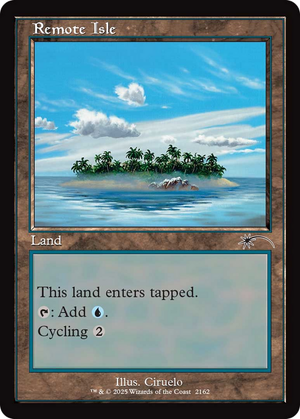
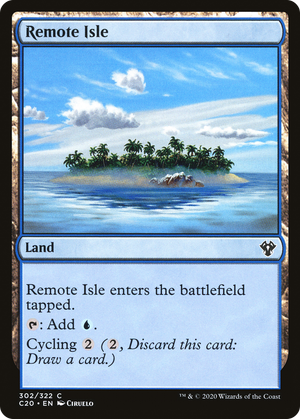
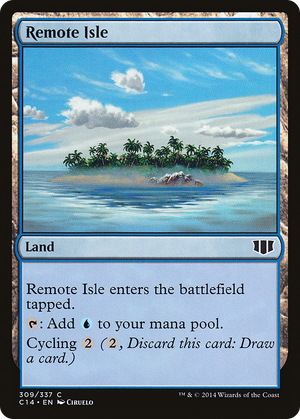
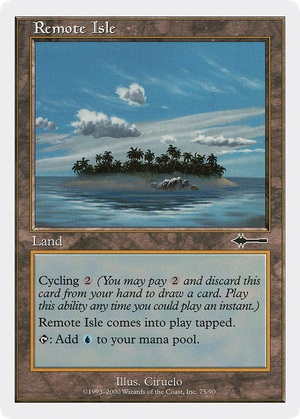
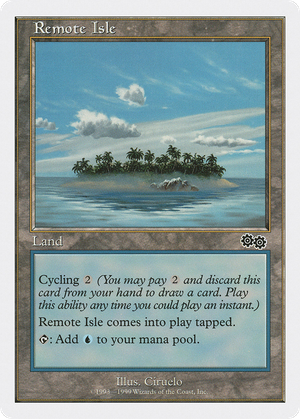
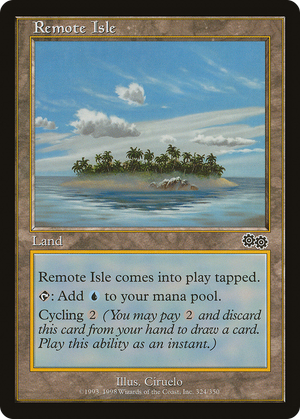
Remote Isle
Cycling lands solved one of the oldest tensions in deckbuilding: the dead draw off the top in the late game, when a tapped mana source matters less than another spell. The trade is built into the rate. The land enters tapped, so it costs a tempo turn on the way down; in exchange, when you have flooded out, two mana turns it into a fresh card instead of a do-nothing draw. That conversion is the whole design. It lets you run a higher land count without the variance penalty, because every excess copy has a second life as a cantrip. The blue member of its cycle pairs the cycling clause with the most card-advantage-hungry color in the game, the one that least wants to spend draw steps on mana, which makes the failure case (drawing this when you needed gas) the one it most directly fixes. The mechanic outlived the set that introduced it and has been revisited in cleaner shells since, but the structural idea here is intact: a land that is never fully dead, priced so the insurance never feels free.
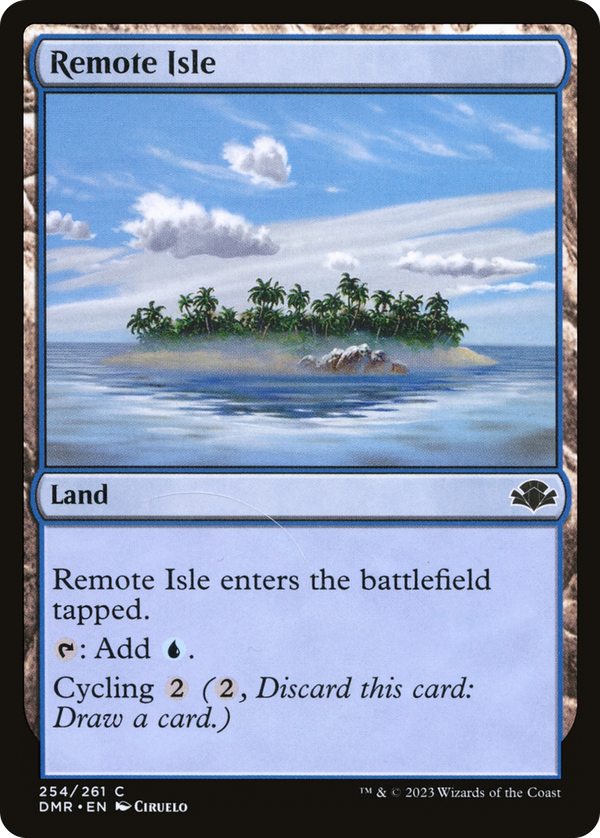
Rules text
 : Add
: Add  .
Cycling
.
Cycling  (, Discard this card: Draw a card.)