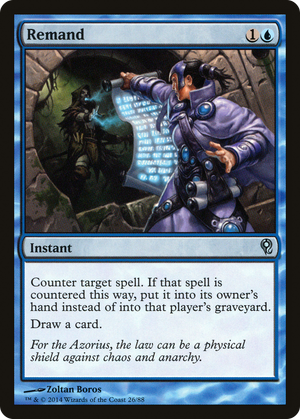
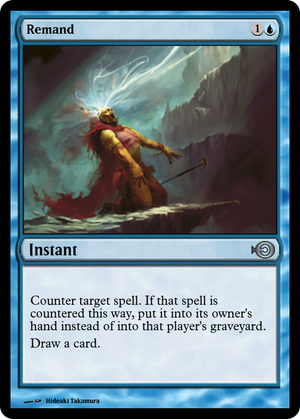
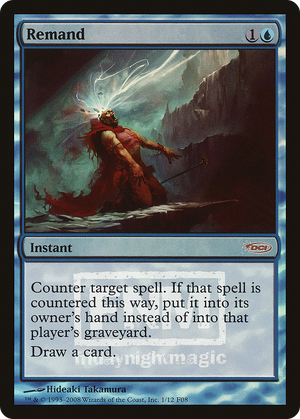
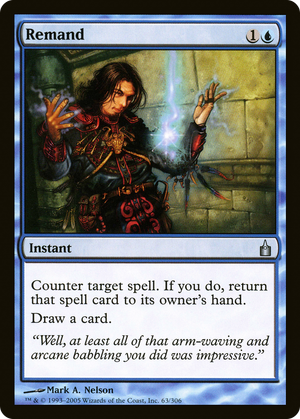
Remand


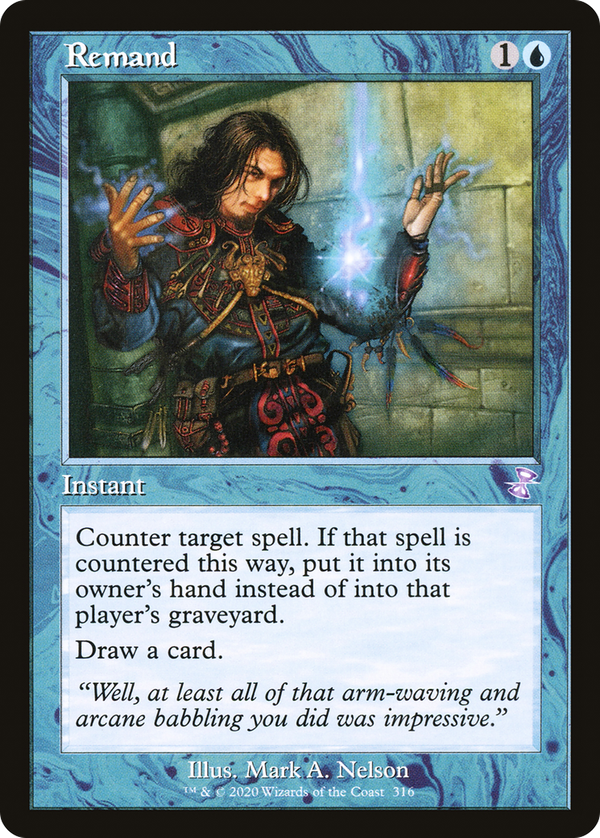
The genius of the design is that it does not actually answer anything: it sells your opponent a turn back at full retail. Counterspells erase; this one defers, returning the spell to hand and letting it be recast the moment the mana is up again. That is a worse permanent answer than a hard counter and a strictly better tempo play, and the trade is deliberate. A tempo deck wants to tax, not eliminate. It wants the opponent down a turn while the card replaces itself, the draw clause turning what would otherwise be a card-down 0-for-1 into a clean 1-for-1 that also costs them a turn. The card found its home in tempo strategies for exactly that reason: backed by a fast clock, returning the spell costs the opponent nothing they can afford, because they are dying before they get to recast it. Used proactively, it buys the window to land a threat; used reactively, it parries the turn's most dangerous play (a burst of removal, a combo piece) for long enough to let the beatdown close. Outside an aggressive shell it is close to dead weight, a tempo swing with no tempo to leverage, and that conditionality is the whole point. The soft-counter idea reduced to its sharpest form: not "you cannot do that," but "not this turn, and I drew a card while you tried."