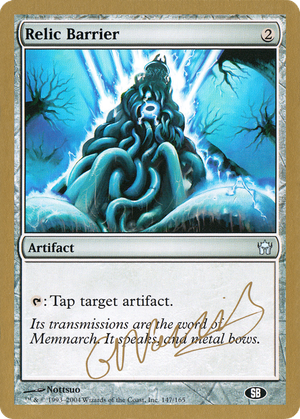
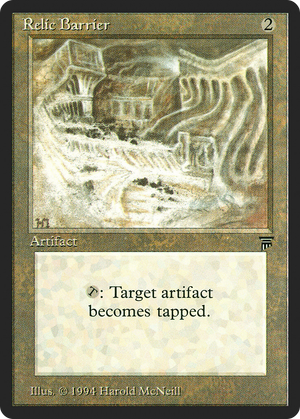
Relic Barrier

Tapping an artifact for the price of one tap looks unremarkable until you consider what the early game actually printed. Icy Manipulator could pin any permanent, but it cost  to cast and asked for mana every activation; symmetrical artifacts like Winter Orb and Howling Mine ran on their own untap steps with no cheap way to interrupt the controller's use of them. This is the disruption piece that fires for free: no mana, no card spent per activation, just a tap. The window is the whole point. Because the stack lets an opponent respond by activating an artifact's ability before the tap resolves, this is not a way to stop a permanent mid-use; it is a way to manipulate tap state on your terms. Tap an opponent's artifact during their upkeep and you force them to commit it early or leave it useless for the turn; tap an artifact creature before they declare attackers and it cannot swing. The design idea is narrower than Icy's any-permanent reach but structurally meaner against the right targets: a permanent that disables artifacts at zero recurring cost. Stax and prison shells have leaned on that shape ever since, and most of its descendants (Tangle Wire's recurring vigil, Static Orb's tax) are variations on the same insight: tapping is a resource, and controlling tap state is a form of denial. The card itself is plain; what it pioneered, treating the tap symbol as an axis of play rather than bookkeeping, is not.
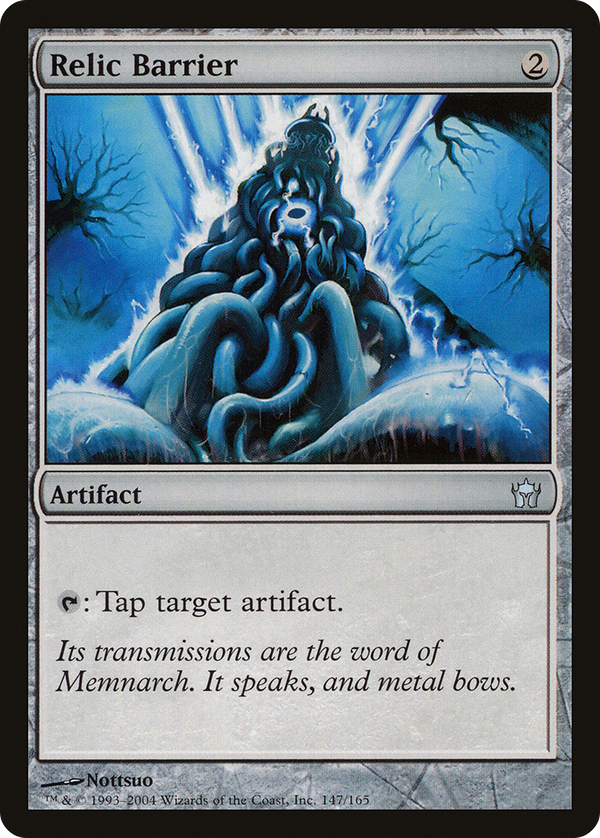
Rules text
 : Tap target artifact.