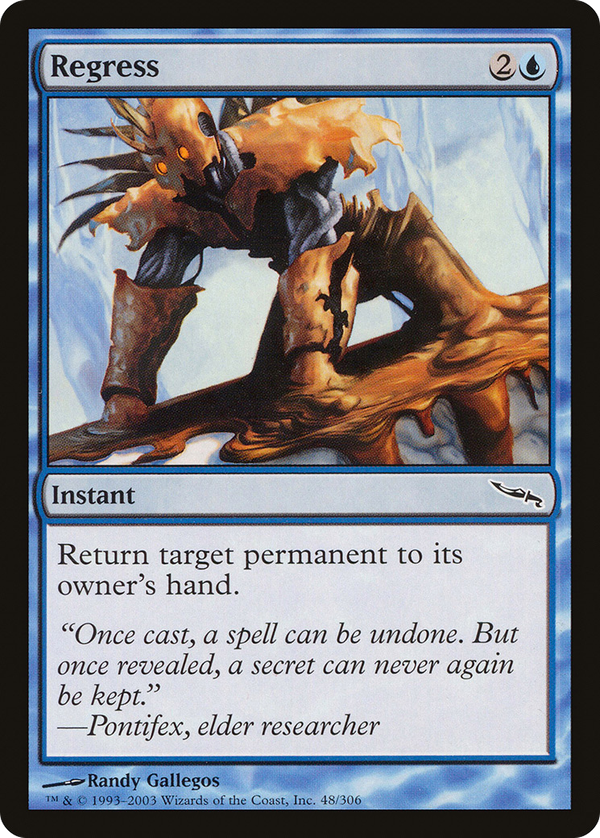
Regress


The whole design here is the absence of fine print. Boomerang shares the exact text at a mana less; this version pays the extra mana for nothing extra except, presumably, the development room to print the same effect again in a different era. What you get is bounce in its plainest form: return any permanent to its owner's hand, creature or artifact or enchantment or planeswalker or land, your own permanents included, tokens vanishing for good since they exist nowhere else to return to. As an answer it is honest about being temporary, solving a problem for exactly one turn, which is why this style of bounce belongs to decks that ride a tempo swing toward a finish rather than grind a board down. The real leverage is the instant-speed window: return an attacker or blocker mid-combat to blank an exchange, peel counters and auras off a permanent by sending the base card home, or reset something that has already spent its turn so its controller pays the cost again. The price of refusing every clause is inefficiency. A card that resets anything for one turn resets nothing for two, and whatever it removed is back the following turn, recast and ready. At three mana for an effect that has been cheaper since the earliest days of the game, the spread between what it does and what it costs is the spell's defining liability.