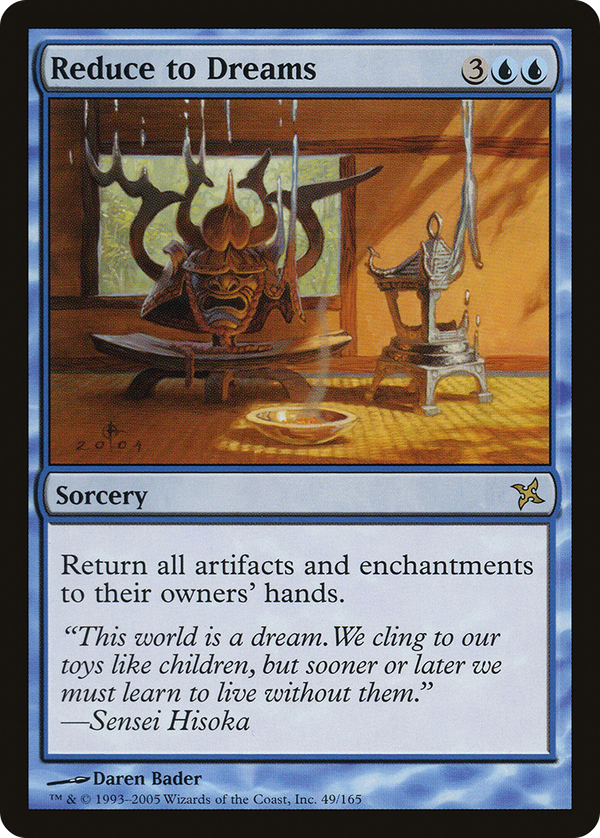
Reduce to Dreams


Two permanent types swept off the board at once, but as a bounce rather than a wipe. That hedge is what justifies the effect where dedicated destruction would be cleaner: returning artifacts and enchantments to hand resets equipment and auras without burying them, lets the owner replay anything cheap, and pointedly leaves your own permanents in your hand to recast. It is a tempo answer dressed up as a sweeper. Against an opponent leaning on a single expensive artifact or a board of cheap enchantments, the math swings sharply: you pay a fixed cost to undo investments that cost far more, and the more permanents on the table, the better the rate. That inverted economics is what makes any symmetric bounce worth running. The catch is that bounce is the gentlest form of removal there is. Everything you send back can come down again, often the following turn, so the spell buys a window rather than solving a problem. That makes it a reset button for a stalled position or a way to break a parity standoff, not a clean answer to the thing that is actually beating you. It belongs to the long line of blue mass-bounce, where the color trades permanence for flexibility and accepts handing the same effect to both players; like the rest of that family, it rewards the deck built to capitalize on the breathing room more than the deck simply trying to survive.