Reclusive Wight


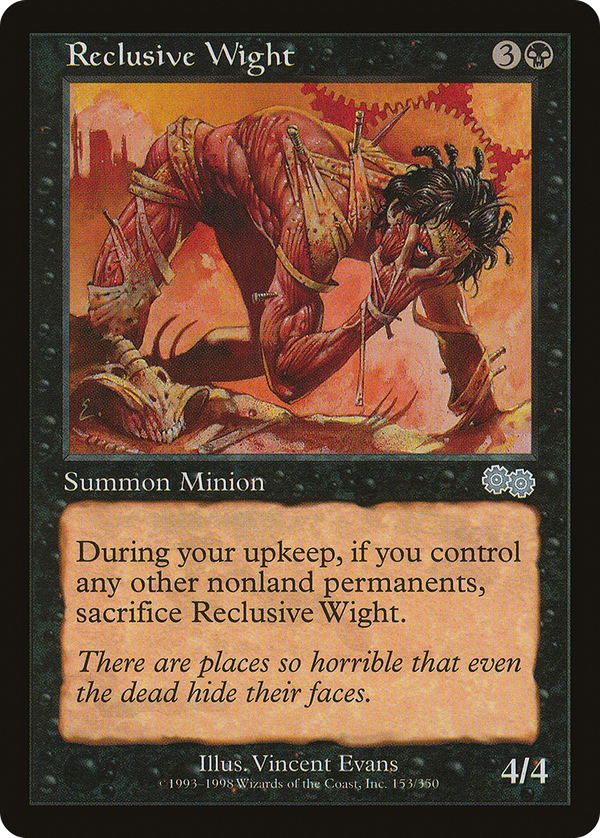
The premium body comes free until you read the upkeep clause, which converts the 4/4 into a standing pact: keep your board barren or sacrifice the Wight to itself. The design inverts the usual relationship between creature count and pressure. Most aggressive decks want to develop a wide board; this one demands the opposite, rewarding the kind of empty-handed, single-threat plan that black usually leaves to red. It belongs to a small group of early-era creatures fenced in by self-destructive upkeep triggers, where the oversized stat line is the carrot and the trigger is the leash. The friction is real and unforgiving: any second nonland permanent, including a mana rock, an enchantment, even a token, springs the trap on your own turn. That constraint is the entire pitch. It prices a strong body against a deckbuilding discipline most players cannot maintain, which kept the Wight a fringe oddity rather than a fixture. The tension is temporal: you can land it on a clear board and swing for years, but the moment you want to develop anything else, the Wight forces a choice between expanding your position and keeping your best creature. That choice, not the rate, is what the card is actually testing.