Read the Tides


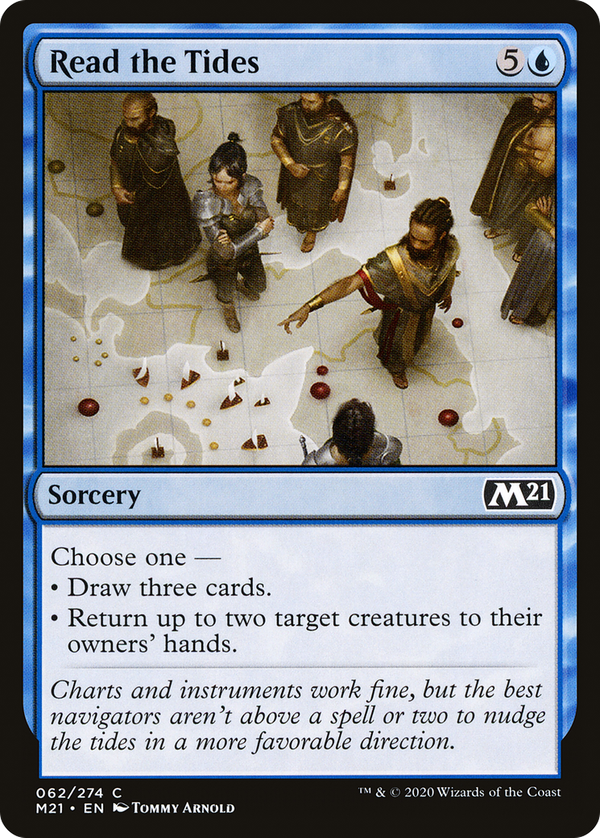
The trade a modal spell makes is that neither half is priced to be efficient on its own; you pay a premium for the option to pick the right mode as you cast the spell. Here the price is steep on both ends: six mana for three cards is well behind the rate cheaper draw spells set, and six mana to bounce two creatures at sorcery speed is a tempo play that arrives a turn or three too late to matter in a fast game. The design logic is not efficiency but insurance. A control shell wants card advantage most of the time, but occasionally needs to unstick a board or reset a pair of resolved threats, and this folds both needs into a single card slot rather than asking the deck to run two dedicated answers. The bounce mode is worth reading closely: "up to two target creatures" lets you clear an opposing pair, or split the bounce across your board and theirs to reset a creature you want to recast for its enter-the-battlefield trigger. But note the sorcery speed: you are bouncing on your own turn, into your own main phase, so this is proactive board management, not a reactive answer held up on an opponent's turn. Whether the insurance justifies the rate is a format question, but the shape is a clean expression of what modal cards are for: paying extra so the deck carries fewer dead cards.