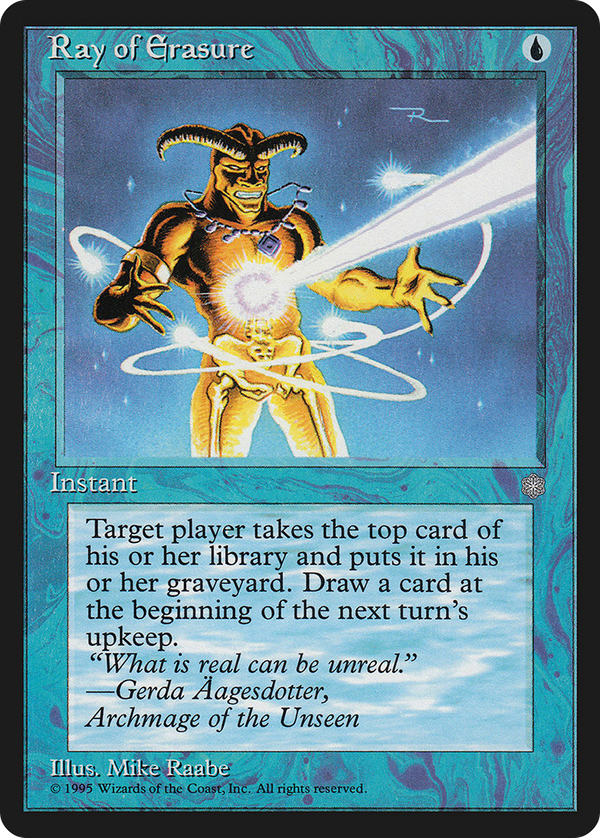
Ray of Erasure

A cantrip wrapped around a mill effect so small it barely registers, and that mismatch is the whole story. Milling one card off any player's library does almost nothing on its own; the line of text that matters is the delayed draw, which replaces the spell at the cost of a full turn of patience. The design is a study in the era's pricing of card advantage: a one-mana instant that nets you a card back, but only after a deliberate downbeat, so it never feels free. The mill clause reads less like a payoff than like an excuse to attach a draw to a one-mana spell without simply printing a strictly-better cantrip. What it actually does best is fix the top of your own library: point it at yourself, shave the card you do not want, and collect a fresh one on the next upkeep. That self-targeting flexibility is where the card's intent lives, even though the keyword reads as an attack. It belongs to a class of early blue filler built to smooth draws and feed graveyard-and-counting effects a single increment at a time, the kind of marginal advantage the game's first decade treated as worth a card slot. The patience tax is the design discipline holding it back from being a real tempo play; remove the upkeep delay and you have a very different, much louder card.