Rathi Dragon


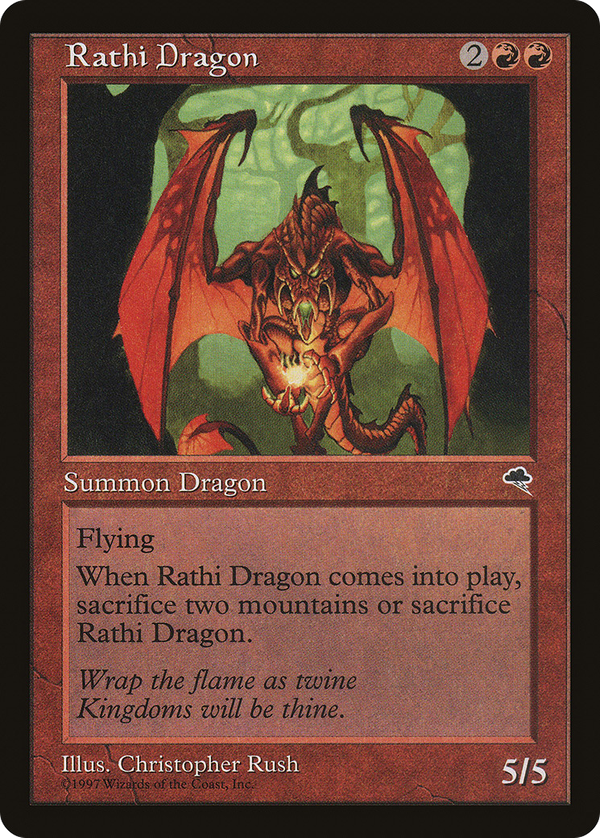
A 5/5 flyer for four mana was a screaming deal in 1997, and the entry tax is the joke that makes it legal: to keep the dragon on the table, you cannibalize two of the very lands that cast it. The math is brutal. You spend four mana and two Mountains to deploy a body that, the turn after, has set your land development back two drops below where everyone else sits. It is a beater built for a deck that has already decided the game will be short, the kind of all-in red shell that does not expect to be casting much past turn five anyway. The sacrifice clause is also a one-time gate rather than an upkeep cost: pay it once on the way in and the dragon is a clean, evasive threat from then on, which separates it from cumulative-upkeep designs that bleed you every turn. There lies the whole pitch. You are not renting the body; you are buying it outright with a steep down payment. It marks a moment when designers were still calibrating how much undercosted stats should cost in resources rather than mana, and the answer here was a real, lasting dent in your own board.