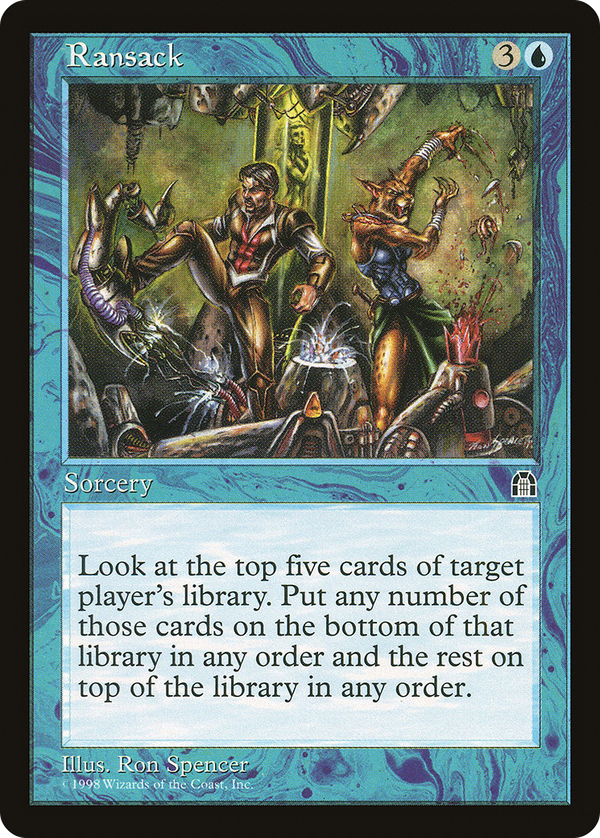
Ransack


Spend a full turn and four mana to impose an ordering on the top five of any library, then watch a single fetch land or shuffle tutor erase the work for free: that is the design problem at the heart of this sorcery. It pays full price to look at five cards it cannot keep. Touching only the top of a deck and offering no card advantage was already a strange thing to print by 1998 standards; the effect amounts to rearranging the next several draws, either yours (to set up your draw step) or an opponent's (where the more violent line is to bury their best cards on the actual bottom of the library, removing them from the top entirely rather than just sinking them a few cards deep). The targeting-any-player clause is the only thing keeping it interesting, and it is a disruption tool with a fatal flaw: any deck-shuffling effect immediately undoes the ordering. What it represents is an early, clumsy attempt at top-of-library control before the design language had settled on cantrips and scry as the efficient way to package this kind of effect. Scry later compressed the same look-reorder-decide decision into a rider that costs nothing extra; it never matched the reach of the any-player clause, but it never had to, because a free self-only version answered the question that mattered. This is card selection from the era when it still had to justify its own card slot rather than ride along on something else.