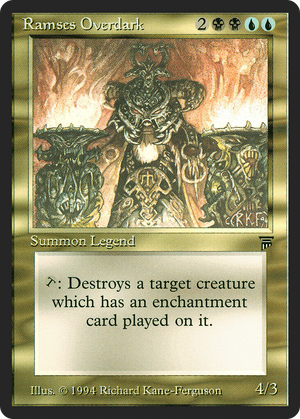
Ramses Overdark



The design conceit is a clear example of Legends-era split-card thinking: an assassin whose blade only finds creatures that someone else has already marked. The tap ability has no targets until a separate enchantment lands first, which means the card is really half of a two-card engine, and the other half lives in your deckbuilding. In 1994 that meant pairing with the aura suite of the day (Paralyze, Weakness, and similar creature-enchanting routes) to turn every targeted enchantment into a kill spell on a stick. The structural restriction is what justifies the body and the repeatability: a 4/3 that destroys a creature every turn would be absurd without the enchantment gate, and that gate is exactly the kind of friction Legends used in place of mana costs or once-per-turn clauses. The deeper idea here is an early stab at modular creature design: an activated ability whose enabler is a whole other card type, asking the deckbuilder to assemble the combo rather than handing it over assembled. The lineage runs through every later "destroy target enchanted creature" effect, but the original is the one that asked the question without softening it with a fallback mode.
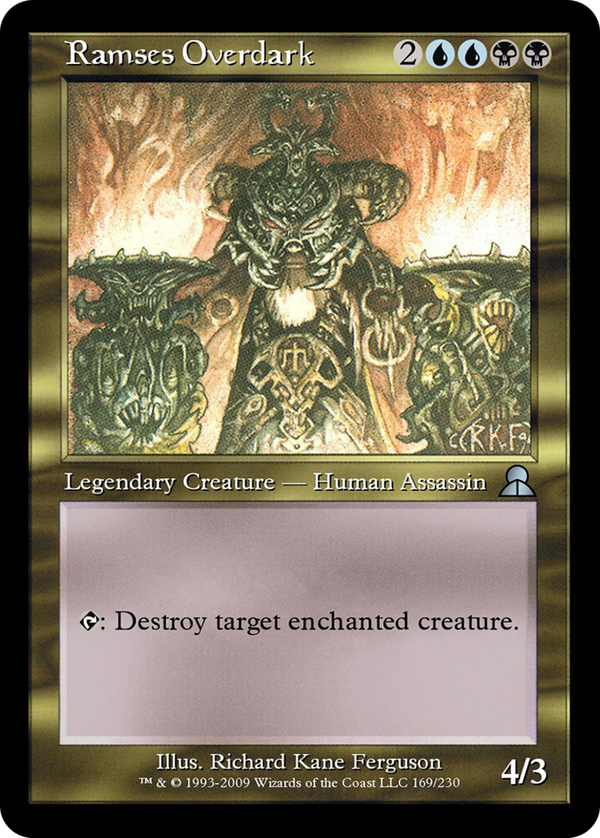
Rules text
 : Destroy target enchanted creature.