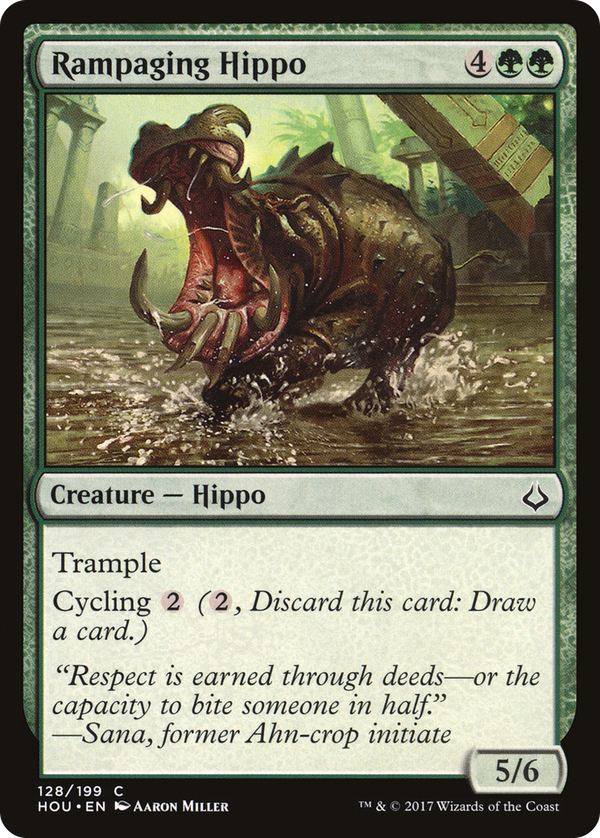
Rampaging Hippo


The cycling number is the whole evaluation here. A 5/6 trampler for six mana is a flat, late-game body, the sort that would otherwise sit uncast in an opening hand on the early turns when it does nothing. Cycling for two is the release valve: the same card that ends a long game by smashing through chump blockers can be spent for a fresh card when you need land or pressure instead of a topdecked beater. This is the standard green-fattie-with-cycling template that the desert-and-drought era leaned on hard, designed so the floor of the card is a replacement draw rather than a stranded six-drop. The body is built for what it costs: trample on a six-toughness frame means it shrugs off most damage-based removal and burn, survives a chunk of -X/-X effects, and forces unfavorable blocks rather than gumming up the ground; targeted destroy and exile spells still answer it clean, so the toughness is a hedge, not armor. The tension the design resolves is the oldest one at green's curve top: how do you justify a nearly vanilla six-drop when every turn should be spent doing something? You make the card refuse to be drawn at the wrong time. The number on the cycling cost is the entire balancing act; price it cheaper and the body becomes irrelevant, price it higher and you are back to a dead six-drop. Two is the threshold where the card stays honest in both modes without being efficient in either.
Rules text
 (, Discard this card: Draw a card.)