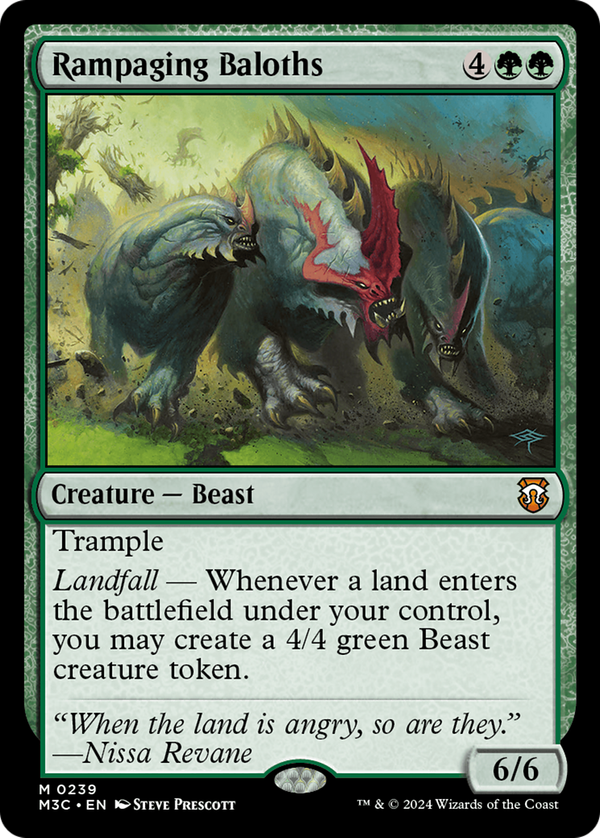
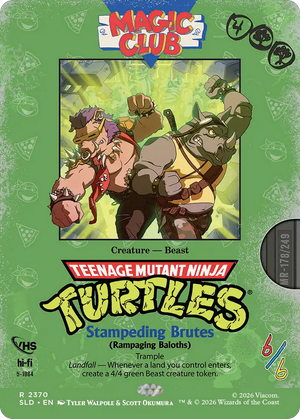
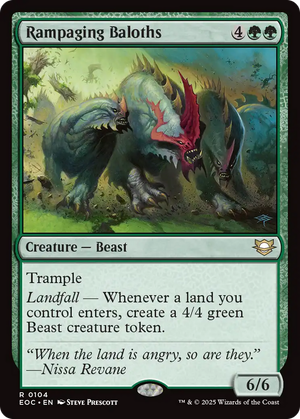
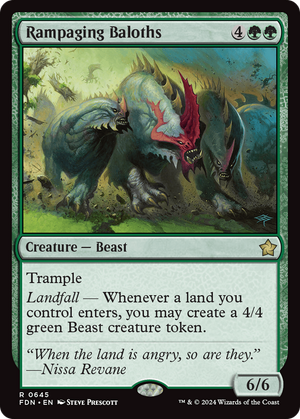
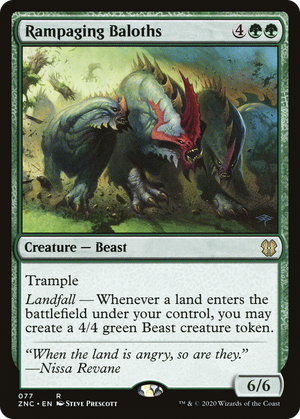
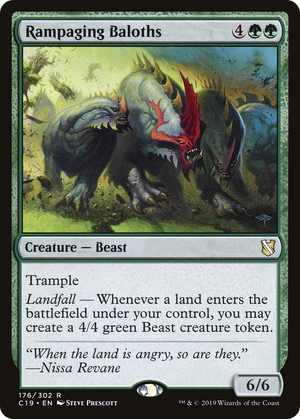
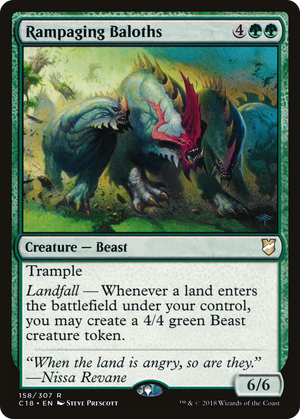
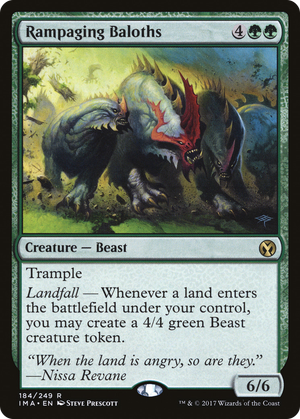
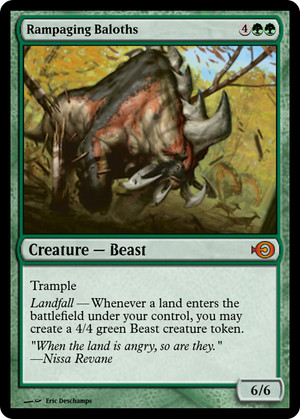
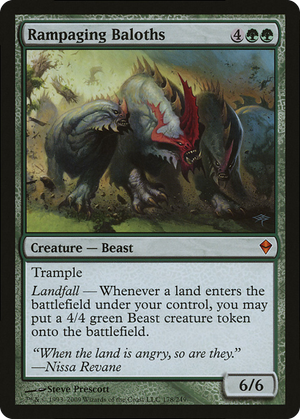
Rampaging Baloths


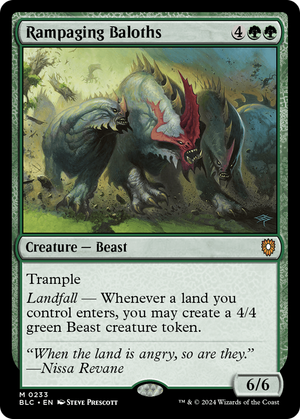
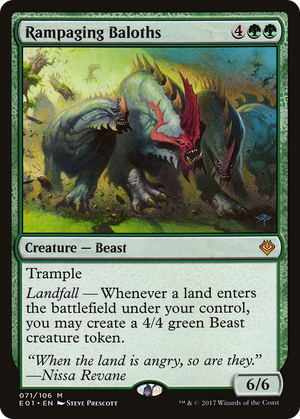
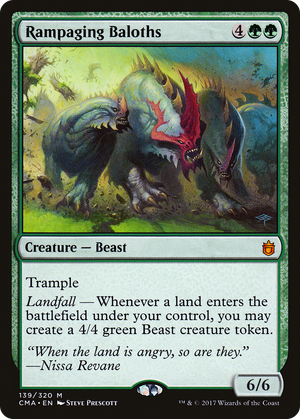
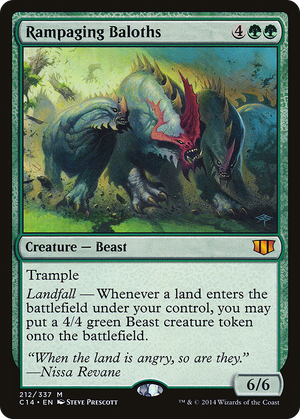
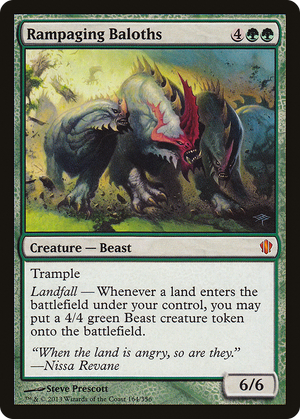
The canonical landfall payoff, and the clearest single statement of what the mechanic is for: turn the one action every deck already takes, playing a land, into a 4/4 every time it happens. The engine asks for nothing exotic. No sacrifice fodder, no graveyard, no spell to cascade into. Each land that enters under your control after this hits the table manufactures another body, so a deck that simply curves out is also building a board it never spent cards to assemble. Fetchlands double the yield by counting twice, extra-land effects multiply it further, and even a plain one-land-per-turn cadence produces tokens faster than most decks can sweep them. The trample is the keyword that closes the loop: in a board flooded with ground-stalling 4/4s, blockers chump the tokens while the 6/6 itself pushes damage through a clogged battlefield instead of bouncing off it. Without trample, a deck this good at making blockers would also be good at building a stalemate; with it, the same flood becomes lethal. It sits at the head of a line of landfall finishers built on the same instinct, but it remains the cleanest version of the idea: the threat a land-heavy curve is pointed at. The lesson it taught a generation of green players is that the resource you spend on tempo and consistency is the same resource that ends the game.