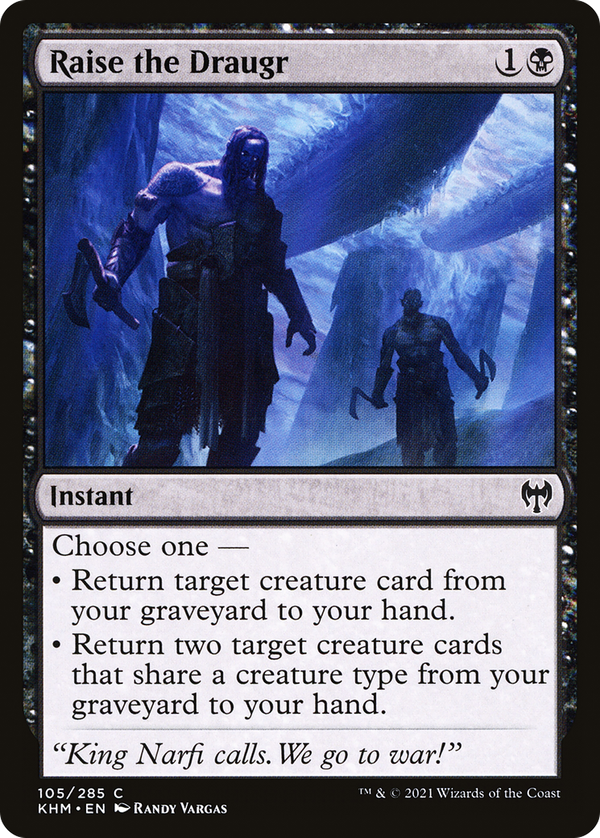
Raise the Draugr


The second mode is where the design actually lives. Returning one creature from the graveyard to hand is bulk recursion, the kind of effect black has had for as long as graveyards have existed; the modal choice to grab two creatures instead, provided they share a creature type, quietly turns a filler card into a tribal engine. That shared-type clause is the whole leverage: it hands you a two-for-one only if you have already committed to a subtype theme, so a deck of unrelated bodies gets plain single-target recursion with extra words, while a graveyard full of Zombies or a bench of Elves gets card advantage at instant speed. The rider that reads like a restriction (both targets must match) is really a construction incentive: the two-creature mode is not so much limited as reserved for decks that earned it. The instant timing separates it from the sorcery-speed recursion black usually gets at this cost. It cannot rescue creatures mid-removal, since a doomed body is still on the battlefield and not yet a legal target in the graveyard, but it lets you rebuild after the dust settles: reload at the end of an opponent's turn once a sweeper has already resolved, then redeploy on your own, holding up interaction until you know you need the bodies back.