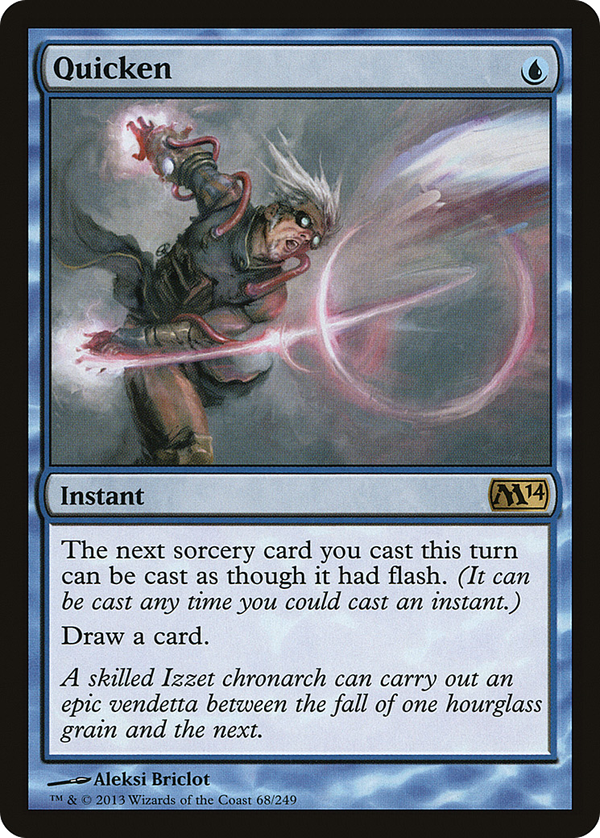
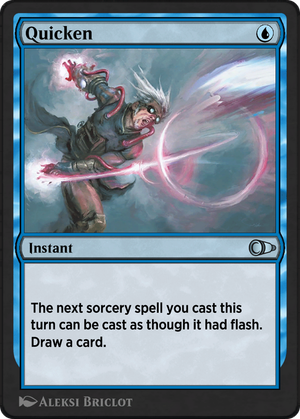
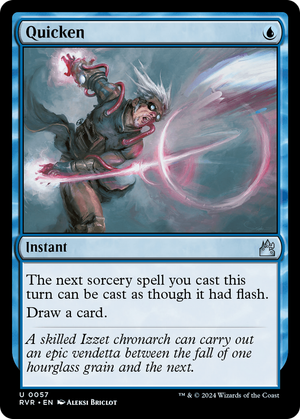
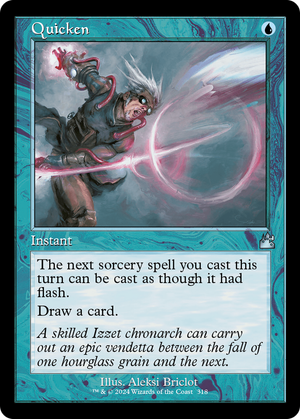
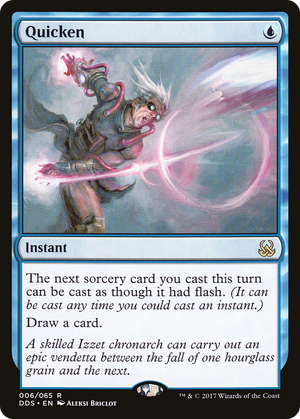
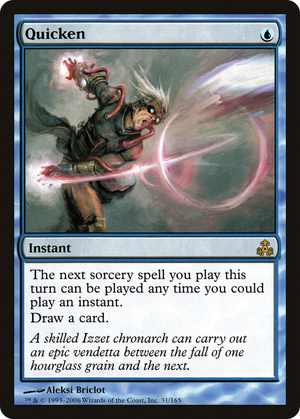
Quicken

The cantrip is the floor: it replaces itself, so the worst case is a one-mana spin of the deck. Everything above the floor is the flash clause, and that clause does something narrow but unusual: it grants flash to a sorcery, not to a creature or an artifact, which means it only pays off when your hand already holds a sorcery you would rather cast on someone else's turn. The reward is timing. Hold up a board wipe until after combat, ambush a topdeck with a draw-three at end of step, or pass with mana open to represent a counterspell while actually sitting on a sorcery-speed threat. The real tension is sequencing rather than card economy: because the spell replaces itself, the cost of unlocking the flash window is just the mana and the click, not a card. What it asks of you instead is a hand built to exploit the timing it buys, since cheap sorceries you would happily cast on your own turn gain nothing from the clause. That pushes the design toward expensive, high-impact sorceries whose value spikes when cast at the wrong moment for your opponent. Most decks would rather run a sorcery they can simply cast when they need it, which is why the flash half rarely earns its slot on rate alone. The cantrip is what makes it castable; the flash is what makes it worth building around for anyone playing the timing window rather than the curve.