Pyromancy


The randomness is the whole design statement here, and it cuts both directions. The activation pays out damage equal to whatever you discard, so the ceiling is high (chuck an expensive bomb and dome the table for six or seven) but you do not get to choose what leaves your hand. You feed cards in and the spell decides how much they were worth. That tension between repeatable burn and giving up agency over your own resources is what keeps the card honest: an enchantment that fires every turn for three mana would be oppressive if you controlled the input, so the design taxes you by reaching into your hand at random and pricing the damage to whatever it finds. The build-around question follows directly: it rewards a hand stuffed with high-cost cards you would not mind losing, which is a strange and specific deck to assemble. It also turns your dead draws into reach, converting cards you could not cast into a slow drip of damage. The repeatable, any-target reach is the durable part of the design, an engine that grinds rather than spikes, and the kind of effect red rarely gets to keep on the battlefield permanently. The randomness clause is the leash; everything interesting about the card lives in the friction it creates.
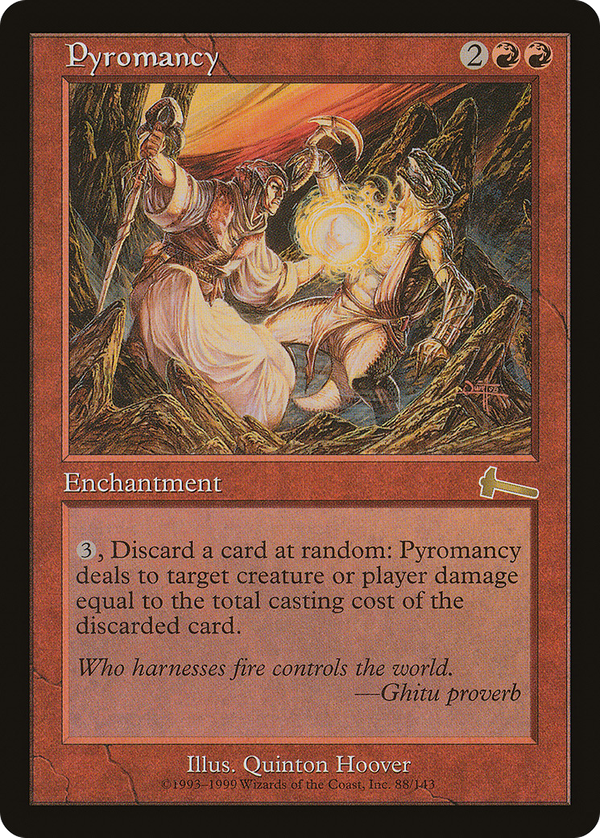
Rules text
 , Discard a card at random: This enchantment deals damage to any target equal to the mana value of the discarded card.