Pym Particles

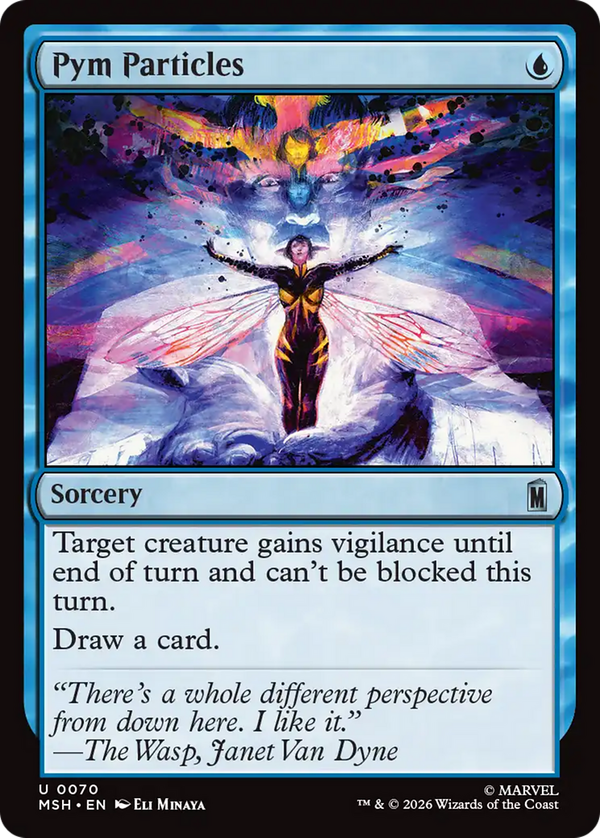
The trick to evaluating a one-mana unblockable enabler is asking what happens when the plan falls apart, and here the cantrip is the answer: whether or not you cared about the attack, the spell replaces itself in hand, so it never costs you a card, only the mana. That does not make it free of conditions (it needs a target creature, so it stays stranded on an empty board), but it means the enabler carries none of the card-disadvantage risk that makes most single-use combat tricks a gamble. The pairing is deliberate: unblockable is the tempo half, the piece you slot onto a body carrying an aura, an infect count, or a combat-damage trigger you need to land, while the cantrip keeps the tempo honest by refunding the slot. The vigilance rider is the quiet third clause and the one that most changes how you use it: the creature you pushed through does not tap to swing, so it stays back to block on the crackback. That matters most when the unblockability was about connecting a trigger rather than racing, because the same attack that resolves your damage-based payoff also holds the fort. This is a piece for the deck that lives or dies on one creature's hit landing regardless of the board, structured so that on the turns it has no attack worth enabling, it simply cycles itself away.