Put Away


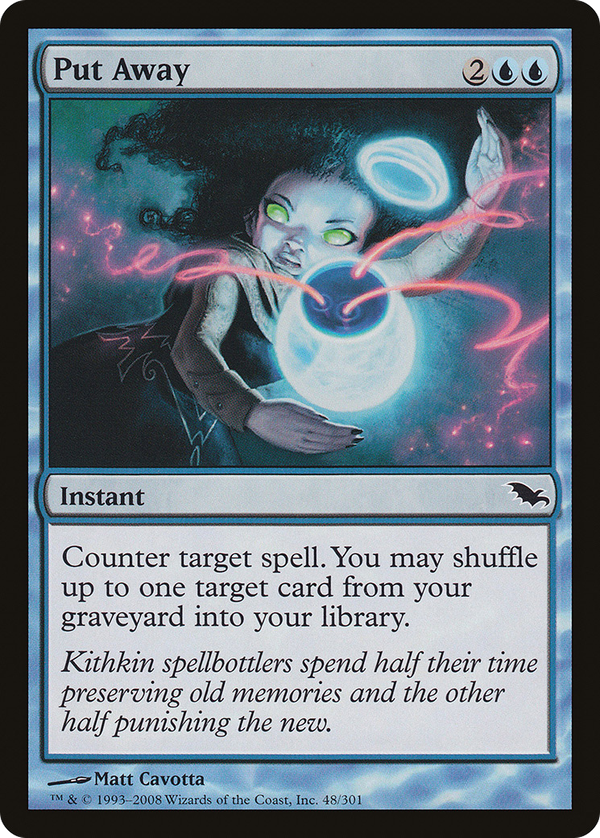
The defining choice here is what the optional clause is for. Bolting a graveyard interaction onto a counterspell usually means recursion: get a spell back, gain a card. This one points the other way. The shuffle clause does not return anything to your hand; it puts a card from your graveyard back into your library, where you have to draw it again before it does anything. So the upside is not card advantage but redundancy insurance: rebury a removal spell or a key threat you expect to need a second copy of, putting it back into the rotation of a deck you intend to draw deep into. The "up to one" wording keeps the counter clean when the graveyard holds nothing worth returning, so the recursion never strands the card on an empty yard. The cost is the rate. Four mana for a hard counter is steep against the cheaper hard counters of its era, and the shuffle is value paid out over future turns rather than tempo gained now. That places it squarely as a control-deck piece for grinding matchups, where stopping a spell and reseeding a spent answer into the library matters more than the two mana spent over the baseline. Its whole proposition depends on valuing the long game enough to pay full freight for a counter whose bonus only cashes in once the game runs long enough to draw the reshuffled card again.