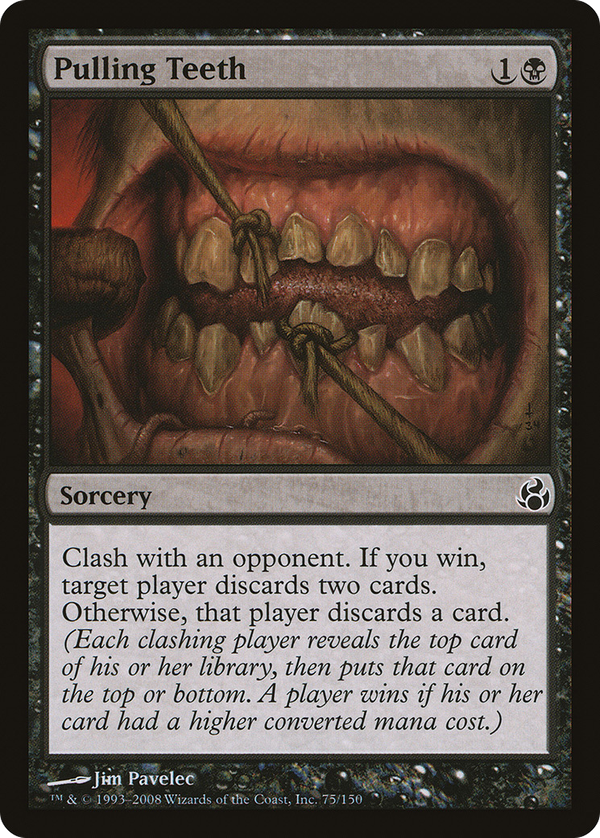
Pulling Teeth


Discard at two mana usually comes with a guarantee: pay the cost, name the count, take the cards. This one swaps the guarantee for a coin flip dressed up as a skill check. Win the clash and you strip two; lose and you still strip one, so the floor is a one-for-one trade you paid an extra mana for and the ceiling is a faster Mind Rot that cost you a body of randomness instead of a third mana. The clash decides which one you got, and it rewards stacking your deck toward expensive top cards while hoping your opponent runs theirs lean. The design lives in that pull: a cheap discard effect that wants a library top-heavy enough to win the reveal, which fights the low curve a discard-heavy disruption deck normally prefers. The payoff for solving that puzzle is modest, since the discard happens either way and the upside is a single extra card. The worst case is just an overcosted discard one, a two-mana effect that does what black has done for less. Clash as a mechanic leaned on exactly this kind of marginal upside, trading a guaranteed effect for a variance-laced bonus, and this is one of its plainer expressions: the extra card is real, but you pay for it in deckbuilding constraint and in a reveal you nudged onto your library and then hoped over.