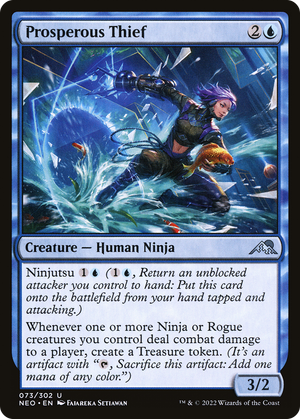
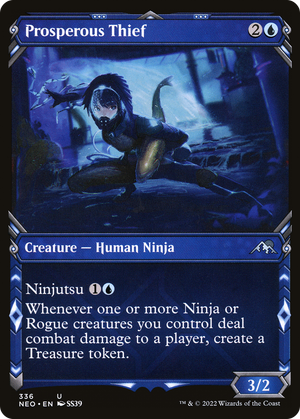
Prosperous Thief


Ninjutsu was designed to reward the second half of a combat step: send an attacker in unblocked, then, once the defender has committed, return that attacker to hand and swap this creature into the same open lane, tapped and attacking. The wrinkle is the Treasure trigger, which keys off any Ninja or Rogue dealing combat damage to a player, not just this body. So a single evasive threat that connects turns into ramp and color fixing, while the cheap ninjutsu cost keeps the whole package light. That is what pushes it past its 3/2 frame: bounce your connected attacker, drop this in to replace it, and the substitution either recycles the same evasion or widens the board into more sources of triggers. Each connection compounds. The Treasures then pay for the next ninjutsu return or the next hard-cast threat, so the shell spends fewer real cards to sustain its tempo chain. That structural loop, evasion into replacement into Treasure into more evasion, is why a fragile creature reads as an engine rather than a beater: every hit adds a rock to the pile, and every rock funds the next hit.
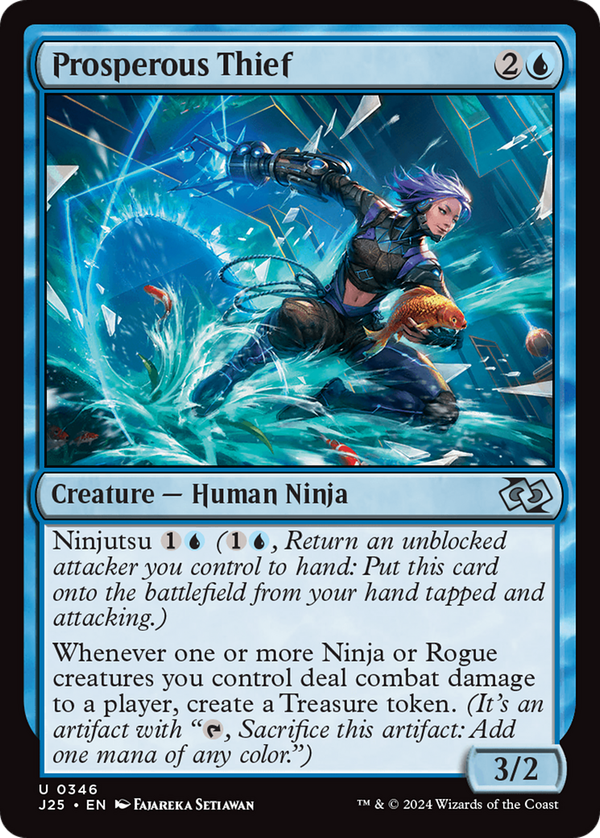
Rules text
 (, Return an unblocked attacker you control to hand: Put this card onto the battlefield from your hand tapped and attacking.)
Whenever one or more Ninja or Rogue creatures you control deal combat damage to a player, create a Treasure token. (It's an artifact with "
(, Return an unblocked attacker you control to hand: Put this card onto the battlefield from your hand tapped and attacking.)
Whenever one or more Ninja or Rogue creatures you control deal combat damage to a player, create a Treasure token. (It's an artifact with " , Sacrifice this token: Add one mana of any color.")