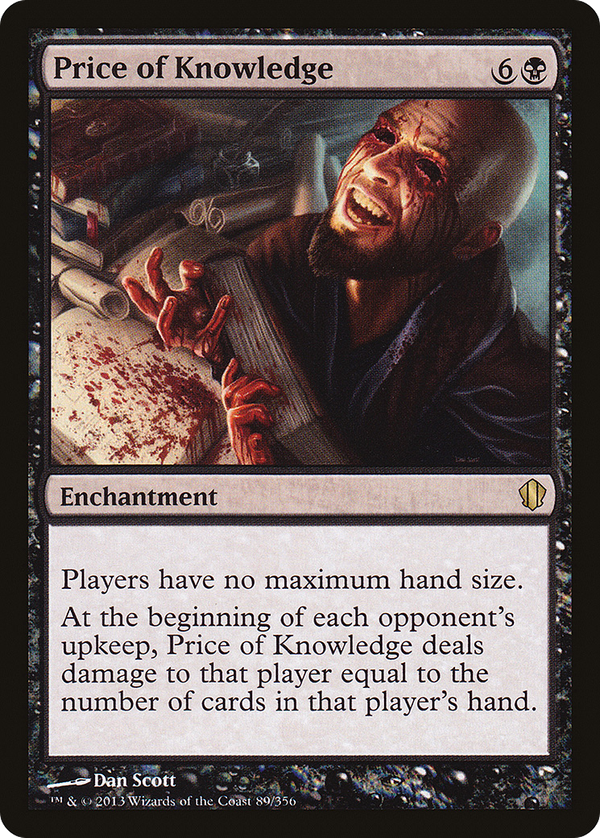
Price of Knowledge


Lifting the maximum hand size in the first line reads like a gift, and that misdirection is the mechanism: the more cards an opponent hoards, the harder they are taxed at the top of each of their upkeeps. It punishes the exact behavior most multiplayer decks are built around, the durdling draw-engine player sitting on twelve cards waiting for the perfect turn. The damage scales with the opponent's own choice, which makes it a self-inflicted clock rather than a flat one; a player who empties their hand pays nothing, while a control deck that wants counterspells and answers in reserve bleeds for the privilege. It is group-pressure, not a kill on its own, an enchantment that converts one table-wide bad habit into a recurring tax and quietly rewards aggression by making accumulation expensive. Seven mana is steep enough that it competes with finishers, so it lives in decks already leaning toward attrition and life-loss, where each opponent's upkeep becomes a small reckoning. The cleverest wrinkle is that you grant the unlimited hand size yourself: you remove the natural discard that would otherwise cap the damage, deliberately enabling the very hoarding you then punish.