Pretender's Claim


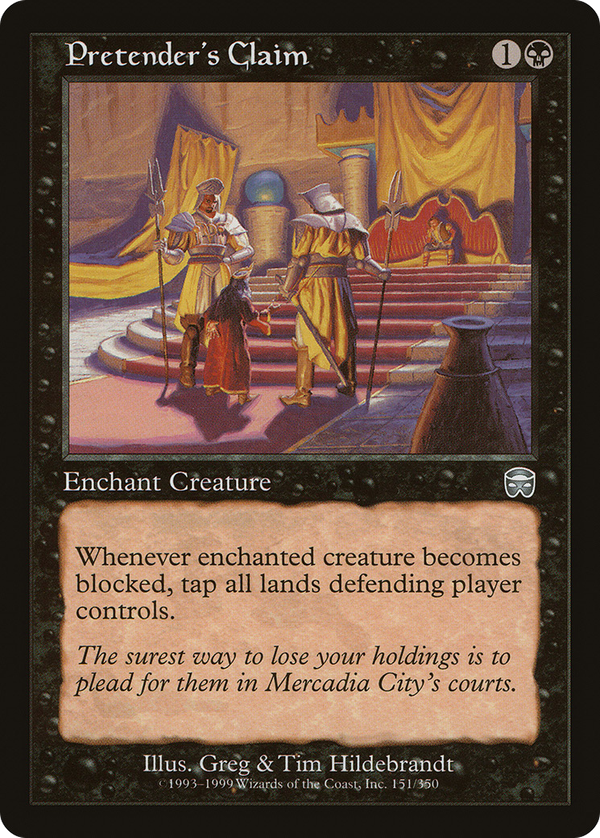
The trigger reads like a punish for blocking, but its real function is a tap-down disguised as combat math. The instruction is to tap all of the defending player's lands the moment the enchanted creature gets blocked, which means a single chump block does not just trade a body: it strips the blocker of mana for the remainder of that turn, dragging their untapped lands into the deal as collateral before their untap step gives everything back. That repositions the card from "make this creature unblockable" toward "make blocking this creature an act of self-sabotage." The defender keeps full agency, which is the design conceit holding the rate down: they choose whether to eat the tap-down or simply take the hit and keep their lands open, so the Aura only fires on their terms, never yours. That conditional is also why it never approaches the reliability of a true mana-denial effect; the trigger leans on the opponent making the block you want, and even then the cost they pay is bounded to a single turn. As a piece of black's edit-the-combat-step toolbox, it belongs to the older, slower school of design where an Aura asked for a full turn of setup and a favorable attack to produce its swing, rather than the modern impulse to bake the payoff into a one-shot spell. The friction (sorcery-speed deployment, dependence on enemy choices, the inherent two-for-one risk of any Aura) is exactly the era's idea of what a build-around tax effect was supposed to cost.