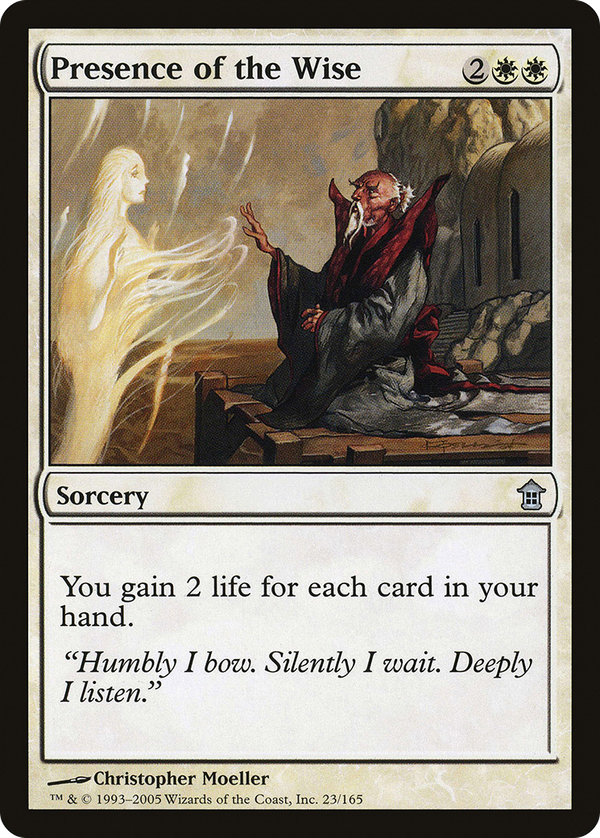
Presence of the Wise


Tying a payoff to your hand size is one of the oldest ways a designer can reward a particular kind of deck without naming it, and this is that idea pointed at lifegain: the more cards you are holding, the bigger the swing, which means the spell is only worth its four mana to a deck that hoards. That is a real tension. Lifegain decks are usually grindy and reactive, content to sit behind their hand; spending two white pips to cash in that hand for life rather than for action asks you to convert your most flexible resource into one that does not affect the board. A full grip might net a dozen or more life, but you paid a card and four mana to be at a higher number, not to be in a better position. The design never resolved that tension, because the effect it produces (a one-shot life total bump scaled to a metric you are incentivized to keep high) does not actually move a game toward winning it. White has always had cheaper, more durable lifegain, and what hand-size payoffs reward best is card advantage engines that other colors do this work for. The interesting part is structural rather than playable: a sorcery whose value is highest exactly when you can least afford to spend the card it costs.