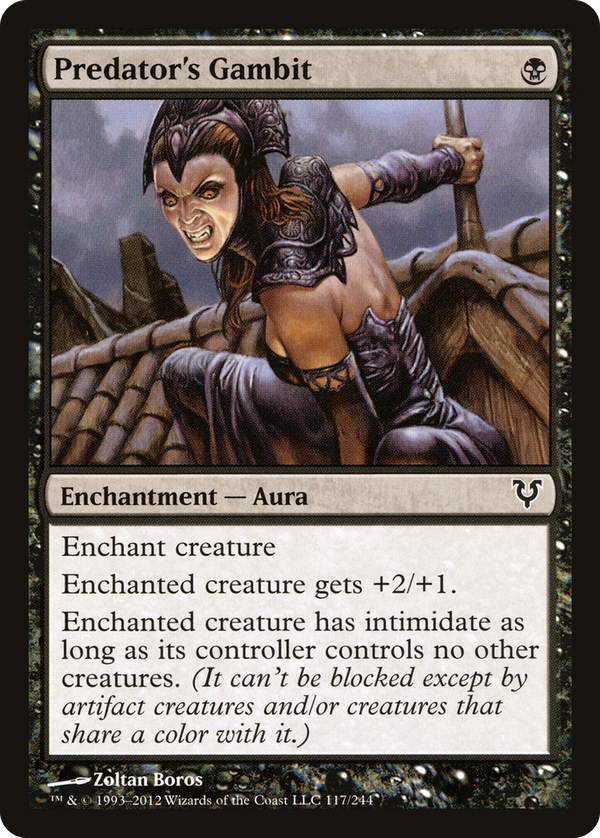
Predator's Gambit

The conditional intimidate is the whole design conceit here: the evasion only switches on while its controller has no other creatures, which turns a generically efficient one-mana pump (+2/+1 on any body) into a deliberate single-threat enabler. It rewards the deck that empties its hand onto one creature and swings over the one that floods the board. The friction is real and self-inflicted: develop a second creature and the evasion vanishes mid-game, so the Aura asks you to keep the battlefield sparse to keep the part you actually wanted. And the evasion it grants is intimidate, not true unblockability: the lone threat still gets stopped by artifact creatures and by creatures that share its color, so the right blockers shut the door even while the controller-count clause is satisfied. Black has long used fear and intimidate to push a single attacker through a clogged ground, but most of those grants are static; this one is contingent on a board state you choose to maintain, which is the unusual lever. The cost of going all-in on one creature is the card-disadvantage tax every Aura carries: removal on the enchanted body strands the Aura too, trading two of your cards for one of theirs. A one-mana investment is what keeps that tax bearable. The gamble of committing everything to a single threat only ever costs you a black mana on the front end, which is the quiet logic that makes pouring resources into one creature worth the exposure.