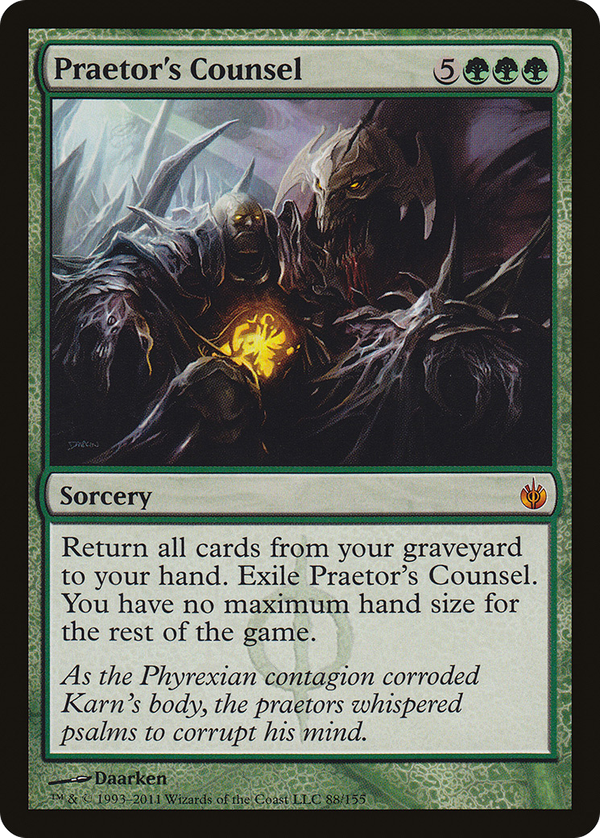
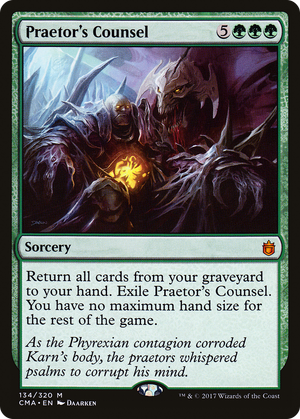
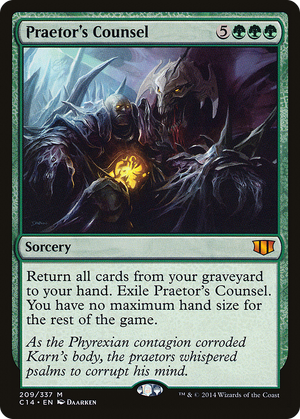
Praetor's Counsel


Most graveyard recursion charges by the card: buy back a single creature, flash back one spell, regrow a single bomb. This pays eight mana once and empties the entire yard back into your hand at full value, then removes the ceiling that would normally punish you for holding all of it. The eight-mana cost is the whole balancing act: by the time you can cast it, a long grindy game has usually filled your graveyard with everything that traded away, so the card's payoff scales with how badly the game has gone for you. It is a reload button for control mirrors and attrition decks, the spell you survive to rather than the spell you build toward, and the no-maximum-hand-size clause is the part that quietly does the heavy lifting. Returning twenty cards is meaningless if you discard fifteen on the cleanup step; lifting the cap turns the regrowth into a genuine resource surplus that carries forward through every turn after. The self-exile is the cost of that permanence: the card refuses to be looped back into its own return, which keeps it honest in graveyard-recursion shells that would otherwise build an infinite hand-refill engine around it. What it offers is not tempo and not efficiency but sheer card mass, delivered in a single sorcery, to the player who has already spent everything and needs all of it back at once.