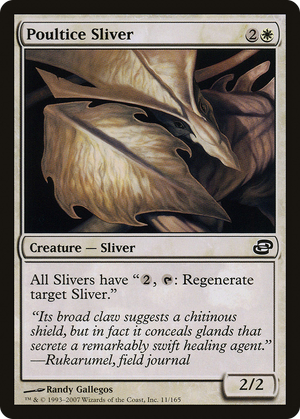
Poultice Sliver


Regeneration is the keyword the Sliver tribe picked up late, and it shows in how this lord distributes it: a shared activated ability rather than a static grant, so every Sliver on the table can pay the toll to save any other. The body is incidental; what this contributes is a reusable, instant-speed insurance policy that turns the hive's chief weakness (a board wipe, a one-for-one trade in combat) into a mana question. Because the ability lives on every Sliver at once, the number of saves you get per turn cycle is the number of untapped Slivers willing to pay two mana, not the number of Poultice Slivers in play; a single copy is enough to arm the whole board, and a second one just adds another body to the count. The catch is the rate. At two mana per save, regeneration is a tax you pay model by model, and against a true wrath the hive runs out of mana long before it runs out of targets. That ceiling is what keeps the effect from being oppressive. Regeneration also does nothing against exile or bounce, the answers that grew more common in the years after this kind of blanket-protection design, which dates its defensive philosophy as much as anything. It belongs to the slower, grindier vision of the tribe: a Sliver that does not attack better or cast cheaper, but makes the whole army harder to clear, one toughness-healing tap at a time.
Rules text
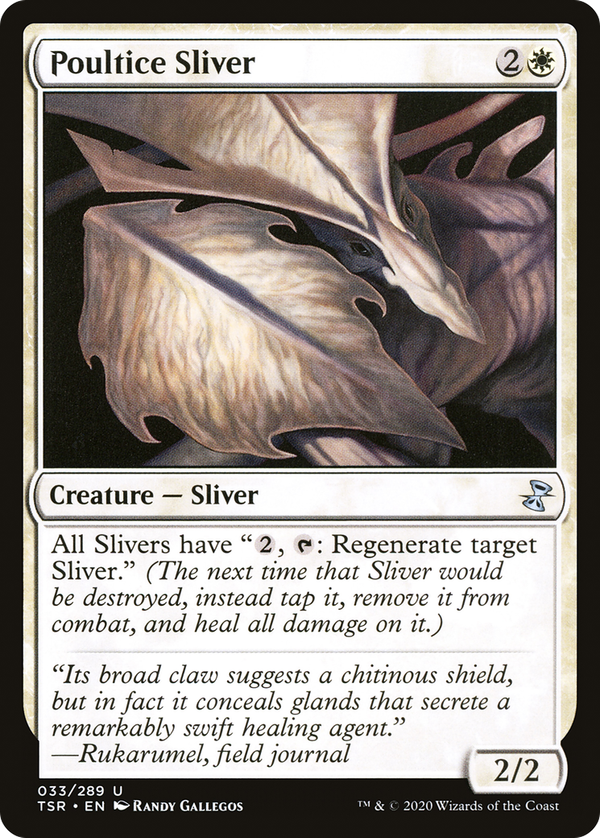
,  : Regenerate target Sliver." (The next time that Sliver would be destroyed this turn, instead tap it, remove it from combat, and heal all damage on it.)