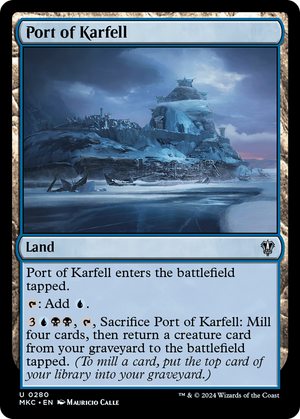
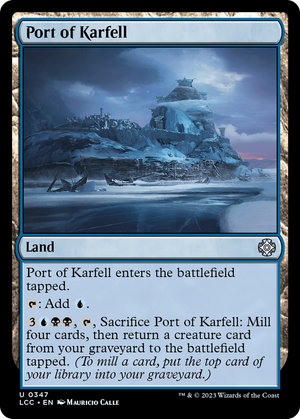
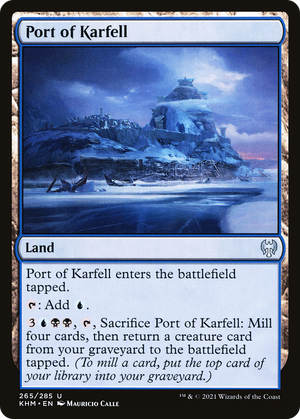
Port of Karfell
For most of a game this is a tapland that produces one blue pip and nothing else, an enters-tapped source that sits in the manabase doing quiet duty. The payoff lives in the sacrifice ability: six mana and the land converts itself into four cards of self-mill followed by a creature returned from your graveyard to the battlefield tapped. That sequencing is the design. The mill resolves first, so the same activation that pays the cost can also stock the reward, seeding a target off the top before the recursion clause looks for one. Lands that cash themselves in are an old idea (the cycling deserts and Barren Moor trade their bodies for cards; creaturelands trade tapland speed for a clock), but wiring the payoff to reanimation aims this at a deck that wants both blue sources and a body to buy back. The cost is deliberately heavy and heavily black-weighted, which keeps it from becoming an early enabler: this is grind insurance, a source that does nothing for several turns and then, with no card in hand required, spends itself to replace a dead creature. It does not accelerate you into a combo; it waits until the graveyard is worth raiding, then cashes in the land to raid it.
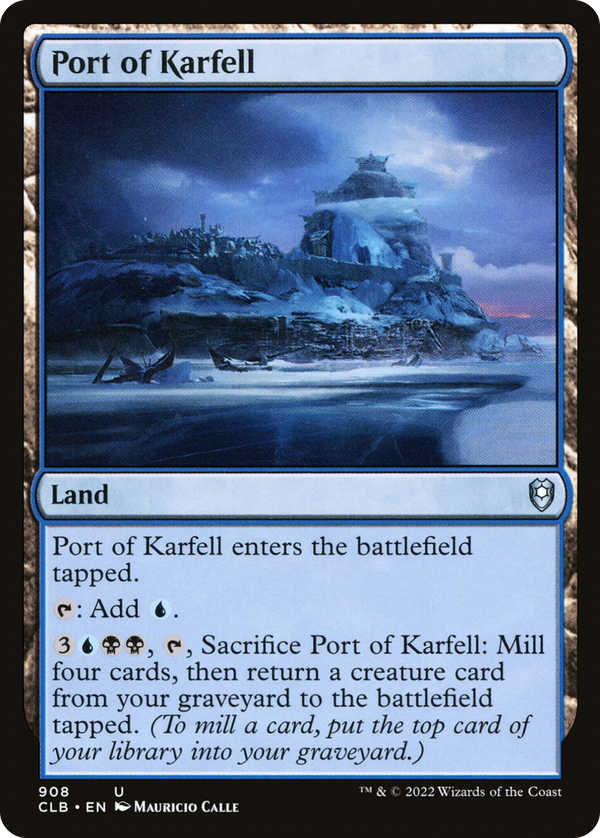
Rules text
 : Add
: Add  .
.

 , , Sacrifice this land: Mill four cards, then return a creature card from your graveyard to the battlefield tapped. (To mill a card, put the top card of your library into your graveyard.)